

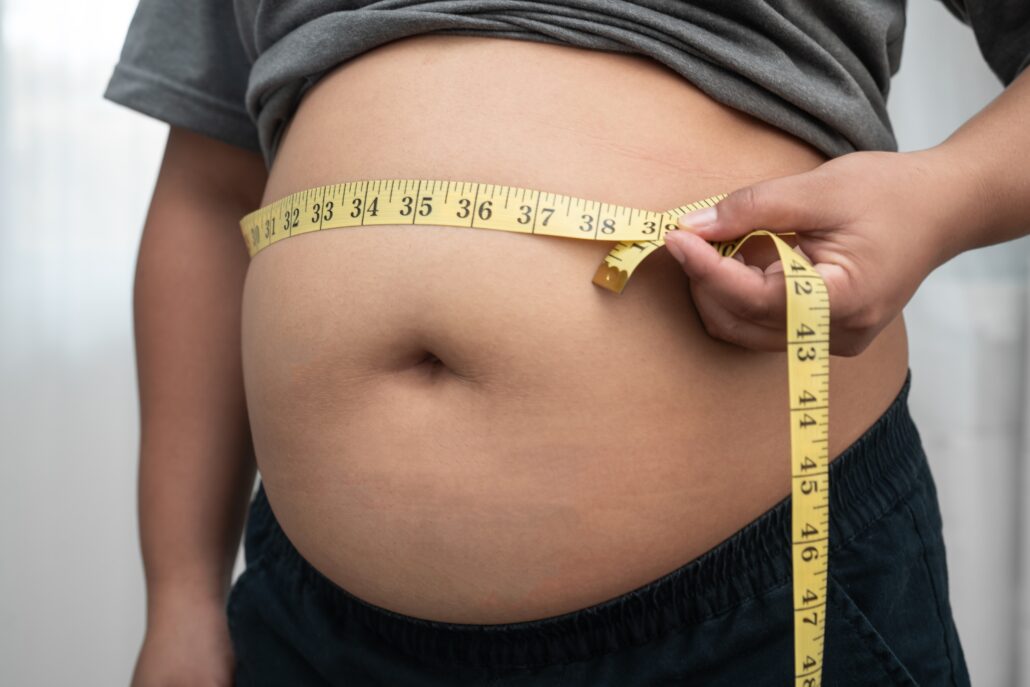
Overweight and obesity are defined as abnormal or excessive fat accumulation that presents a health risk. A body mass index (BMI) over 25 kg/m² is considered overweight, and over 30 kg/m² is considered obese.
1.) World Health Organization. Obesity (who.int)
2.) World Health Organization (WHO). Risk reduction of cognitive decline and dementia: WHO guidelines, second edition. Geneva: World Health Organization; 2026. Licence: CC BY-NC-SA 3.0 IGO. ISBN 978-92-4-012355-7
Why is overweight a risk factor for dementia?
| Background | An higher BMI with one smaller brain volume connected. It is suspected that obesity-induced brain shrinkage can age the brain by up to 10 years. |
| Mechanisms: | Obesity accelerates the degradation of brain regions, which are also affected in Alzheimer's dementia, and can worsen the progression of the disease and the severity of symptoms. Chronic inflammation, Conditions favored by obesity can also damage the brain, as they overactivate immune cells and cause nerve damage. |
1.) World Health Organization (WHO). Risk reduction of cognitive decline and dementia: WHO guidelines, second edition. Geneva: World Health Organization; 2026. Licence: CC BY-NC-SA 3.0 IGO. ISBN 978-92-4-012355-7
2.) Livingston G, Huntley J, Liu KY, Costafreda SG, Selbæk G, Alladi S, Ames D, Banerjee S, Burns A, Brayne C, Fox NC, Ferri CP, Gitlin LN, Howard R, Kales HC, Kivimäki M, Larson EB, Nakasujja N, Rockwood K, Samus Q, Shirai K, Singh-Manoux A, Schneider LS, Walsh S, Yao Y, Sommerlad A, Mukadam N. Dementia prevention, intervention, and care: 2024 report of the Lancet standing Commission. Lancet. 2024 Aug 10;404(10452):572-628. doi: 10.1016/S0140-6736(24)01296-0. Epub 2024 Jul 31. PMID: 39096926.
What can I do?
- Maintain a healthy weight (BMI: 18.5 to 24.9)
- The two most important weight loss measures are regular exercise and one healthy eating.
Movement
Regular physical activity can help achieve a healthy weight. The recommendation is to aim for at least 150 minutes of moderate-intensity exercise or 75 minutes of vigorous-intensity exercise per week. Activities can be broken down into smaller segments.
nutrition
The focus is on a varied diet with different foods to get all the necessary nutrients.
A balanced diet is divided into the following main groups:
- Fruits and vegetables: one-third of the plate, five servings daily.
- Starchy foods: another third, preferably whole grains.
- Protein-rich foods: fish, eggs, legumes, and lean meat in moderation.
- Dairy products: calcium-rich, low-fat varieties.
- Oils and fats: Sparingly, preferably unsaturated fats.
- Foods rich in sugar and fat: Only rarely and in small amounts.
- Fluids: 6–8 glasses of water or low-calorie beverages daily.
1.) World Health Organization (WHO). Risk reduction of cognitive decline and dementia: WHO guidelines, second edition. Geneva: World Health Organization; 2026. Licence: CC BY-NC-SA 3.0 IGO. ISBN 978-92-4-012355-7
2.) Movement Recommendations_BZgA-Special Issue_3.pdf
3.) https://www.nhs.uk/live-well/eat-well/food-guidelines-and-food-labels/the-eatwell-guide/