

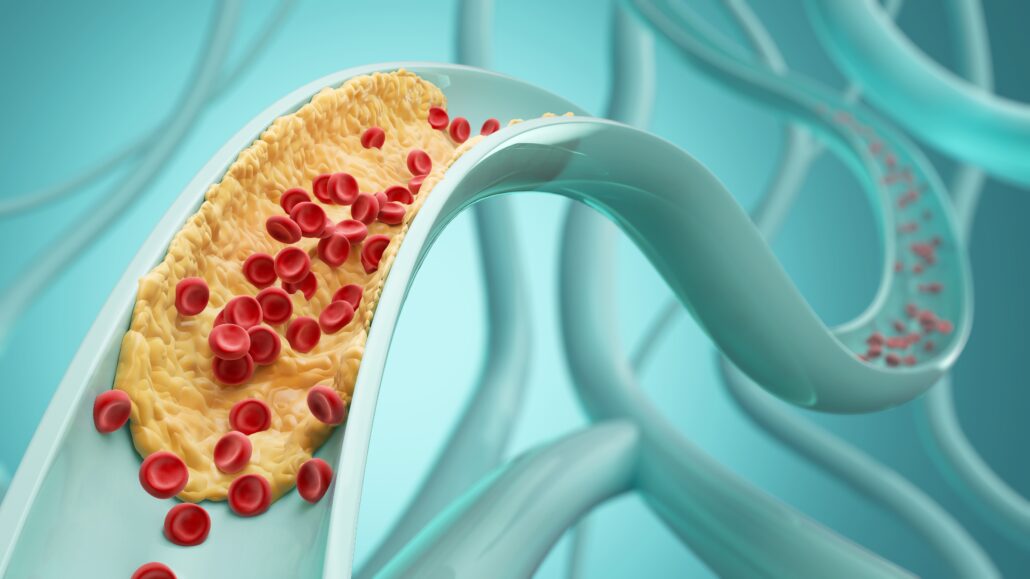
Elevated LDL cholesterol levels indicate a high concentration of low-density lipoprotein cholesterol in the blood, which can deposit in the arteries and increase the risk of dementia and strokes.
1.) World Health Organization (WHO). Risk reduction of cognitive decline and dementia: WHO guidelines, second edition. Geneva: World Health Organization; 2026. Licence: CC BY-NC-SA 3.0 IGO. ISBN 978-92-4-012355-7
2.) Alzheimer’s Society. (n.d.). Cholesterol and dementia. Alzheimer’s Society. https://www.alzheimers.org.uk/about-dementia/managing-the-risk-of-dementia/possible-risks-of-dementia/cholesterol
Why is high LDL cholesterol a risk factor for dementia?
| Mechanisms: | Deposits in the arteries: Deposits in the blood vessels lead to impaired blood flow to the brain Risk of stroke: High LDL cholesterol levels increase the risk of microinfarcts and stroke, which in turn can increase the risk of dementia. Cholesterol and the Brain: High LDL cholesterol levels promote the production and deposition of amyloid plaques in the brain, which play a significant role in Alzheimer's disease. HDL cholesterol as a protective factor: HDL (high-density lipoprotein) cholesterol helps break down excess cholesterol and may therefore protect against the development of Alzheimer's disease. |
1.) World Health Organization (WHO). Risk reduction of cognitive decline and dementia: WHO guidelines, second edition. Geneva: World Health Organization; 2026. Licence: CC BY-NC-SA 3.0 IGO. ISBN 978-92-4-012355-7
2.) https://www.alzheimers.org.uk/about-dementia/managing-the-risk-of-dementia/risk-factors-for-dementia
3.) Wee, J., Sukudom, S., Bhat, S., Marklund, M., Peiris, N. J., Hoyos, C. M., Patel, S., Naismith, S. L., Dwivedi, G., & Misra, A. (2023). The relationship between midlife dyslipidemia and lifetime incidence of dementia: A systematic review and meta-analysis of cohort studies. Alzheimer’s & dementia (Amsterdam, Netherlands), 15(1), e12395. https://doi.org/10.1002/dad2.12395
4.) Pedrini, S., Chatterjee, P., Hone, E., & Martins, R. N. (2021). High-density lipoprotein-related cholesterol metabolism in Alzheimer’s disease. Journal of neurochemistry, 159(2), 343–377. https://doi.org/10.1111/jnc.15170
What can I do?
The foundation for reducing overall cardiovascular risk is a healthy lifestyle for all types of lipid metabolism disorders.
This includes nutrition and its optimization in four key areas:
- Make sure your calorie intake is appropriate for your needs to prevent or reduce overweight or obesity.
- When choosing fats, pay attention to the quality and quantity of your fat sources. Give preference to polyunsaturated fatty acids (FAs) from fish and vegetable oils such as flaxseed, walnut, and canola oil. Also, reduce your intake of saturated FAs from animal-based foods and solid vegetable fats.
- Increase your fiber intake by eating foods such as vegetables, whole grains, nuts, and seeds.
- Cut back on your intake of readily available carbohydrates (e.g., refined sugar, white flour products, sweets) and alcohol.
A healthy lifestyle also includes regular exercise and an active daily routine with as little time spent sitting as possible.
Drug treatment:
In addition to lifestyle changes, there are a variety of well-studied medications available to lower LDL cholesterol. Medications should only be taken under a doctor’s supervision.
1.) World Health Organization (WHO). Risk reduction of cognitive decline and dementia: WHO guidelines, second edition. Geneva: World Health Organization; 2026. Licence: CC BY-NC-SA 3.0 IGO. ISBN 978-92-4-012355-7
2.) Empfehlungen – Deutsche Gesellschaft für Lipidologie e. V. (DGFL) – Lipid-Liga