

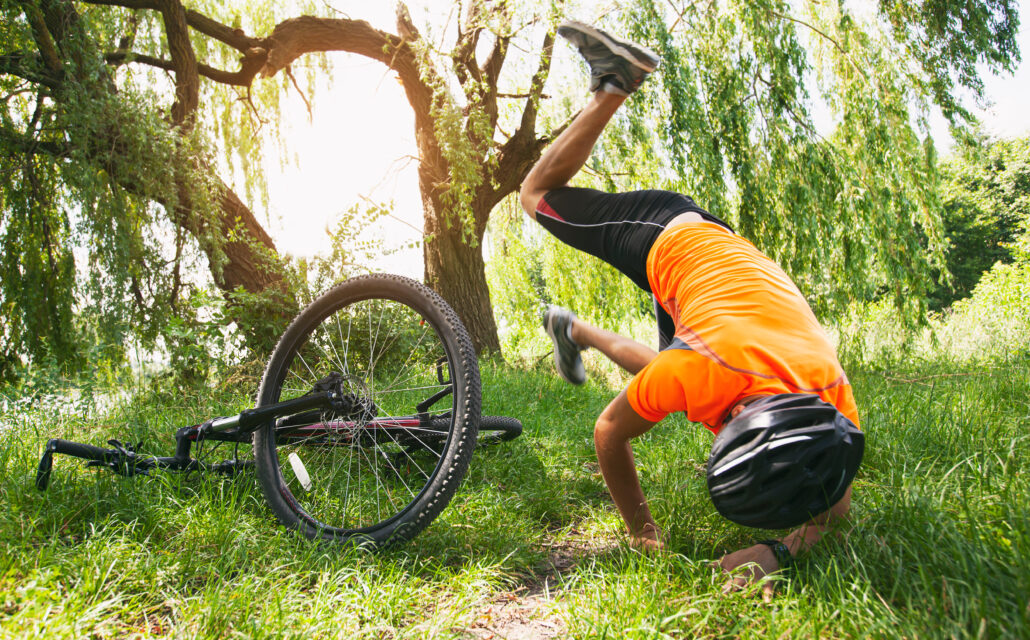
Ein Schädel-Hirn-Trauma ist eine Schädigung des Gehirns durch eine äußere Krafteinwirkung auf den Kopf, die zu vorübergehenden oder andauernden Störungen der Gehirnfunktion führen kann.
1.) World Health Organization (WHO). Risk reduction of cognitive decline and dementia: WHO guidelines, second edition. Geneva: World Health Organization; 2026. Licence: CC BY-NC-SA 3.0 IGO. ISBN 978-92-4-012355-7
2.) National Institute of Neurological Disorders and Stroke. Traumatic Brain Injury (TBI) (nih.gov)
Why is a traumatic brain injury a risk factor for dementia?
| Background | Research findings suggest that traumatic brain injury und möglicherweise mit einem früheren Beginn einer Demenzerkrankung verbunden ist (3,4,5). |
| Mechanisms: | Wie genau ein Schädel-Hirn-Trauma langfristig das Demenzrisiko beeinflusst, ist noch nicht vollständig geklärt. Diskutiert werden unter anderem Schädigungen von Nervenzellen und Nervenfasern, Veränderungen von Eiweißen im Gehirn sowie entzündliche Prozesse und der Abbau von Hirngewebe. Welche Rolle dabei beispielsweise die Häufigkeit und Schwere der Verletzungen spielen, wird weiterhin erforscht (1,2,5). |
1.) World Health Organization (WHO). Risk reduction of cognitive decline and dementia: WHO guidelines, second edition. Geneva: World Health Organization; 2026. Licence: CC BY-NC-SA 3.0 IGO. ISBN 978-92-4-012355-7
2.) Brett, B. L., Gardner, R. C., Godbout, J., Dams-O’Connor, K., & Keene, C. D. (2022). Traumatic Brain Injury and Risk of Neurodegenerative Disorder. Biological psychiatry, 91(5), 498–507. https://doi.org/10.1016/j.biopsych.2021.05.025
3.) Graham, N. S., & Sharp, D. J. (2019). Understanding neurodegeneration after traumatic brain injury: from mechanisms to clinical trials in dementia. Journal of neurology, neurosurgery, and psychiatry, 90(11), 1221–1233. https://doi.org/10.1136/jnnp-2017-317557
4.) Livingston G, Huntley J, Liu KY, Costafreda SG, Selbæk G, Alladi S, Ames D, Banerjee S, Burns A, Brayne C, Fox NC, Ferri CP, Gitlin LN, Howard R, Kales HC, Kivimäki M, Larson EB, Nakasujja N, Rockwood K, Samus Q, Shirai K, Singh-Manoux A, Schneider LS, Walsh S, Yao Y, Sommerlad A, Mukadam N. Dementia prevention, intervention, and care: 2024 report of the Lancet standing Commission. Lancet. 2024 Aug 10;404(10452):572-628. doi: 10.1016/S0140-6736(24)01296-0. Epub 2024 Jul 31. PMID: 39096926.
5.) Schaffert, J., LoBue, C., White, C. L., Chiang, H. S., Didehbani, N., Lacritz, L., Rossetti, H., Dieppa, M., Hart, J., & Cullum, C. M. (2018). Traumatic brain injury history is associated with an earlier age of dementia onset in autopsy-confirmed Alzheimer’s disease. Neuropsychology, 32(4), 410–416. https://doi.org/10.1037/neu0000423
What can I do?
Schädel-Hirn-Traumata möglichst vermeiden
Nach aktuellem Forschungsstand gibt es keine spezifische Behandlung oder Maßnahme nach einem Schädel-Hirn-Trauma, für die ausreichend belegt ist, dass sie das spätere Risiko für kognitiven Abbau oder Demenz senkt. Deshalb ist es besonders wichtig, Kopfverletzungen möglichst zu vermeiden (5).
Im Alltag und Straßenverkehr (4,5):
- Sturzvermeidung: Prüfen Sie Ihr Wohnumfeld auf Sturzgefahren, machen Sie Übungen zur Sturzprophylaxe, wie Kraft- und Gleichgewichtstraining und lassen Sie ggf. Ihre Medikamente überprüfen.
- Verkehrssicherheit: Halten Sie sich an die Verkehrsregeln, tragen Sie Helme in Situationen mit erhöhtem Risiko für Kopfverletzungen, z.B. Fahrrad fahren und nutzen Sie Sicherheitsgurte und für Kinder geeignete Autositze.
- (Geschlechtsspezifischer) Gewalt vorbeugen: Informieren Sie sich über Beratungs- und Unterstützungsangebote und nehmen Sie bei Bedarf Hilfe in Anspruch.
Beim Sport (1,2,3,5):
Das Risiko einer neurodegenerativen Erkrankung im Sport sollte nicht über die Botschaft hinwegtäuschen, dass Sport im Allgemeinen gut für die Gesundheit ist. Trotzdem ist es sinnvoll, dass Sie entsprechende Maßnahmen zum Schutz vor Kopfverletzungen ergreifen:
- Informieren Sie sich über die Vorbeugung und den richtigen Umgang mit Gehirnerschütterungen.
- Tragen Sie geeignete Schutzausrüstung.
- Limit heading drills.
- Vermeiden Sie soweit möglich Zusammenstöße mit hoher Aufprallenergie.
- Beachten Sie die Empfehlungen für die Rückkehr zum Sport nach einer Gehirnerschütterung.
1.) Brett, B. L., Gardner, R. C., Godbout, J., Dams-O’Connor, K., & Keene, C. D. (2022). Traumatic Brain Injury and Risk of Neurodegenerative Disorder. Biological psychiatry, 91(5), 498–507. https://doi.org/10.1016/j.biopsych.2021.05.025
2.) Graham, N. S., & Sharp, D. J. (2019). Understanding neurodegeneration after traumatic brain injury: from mechanisms to clinical trials in dementia. Journal of neurology, neurosurgery, and psychiatry, 90(11), 1221–1233. https://doi.org/10.1136/jnnp-2017-317557
3.) Livingston G, Huntley J, Liu KY, Costafreda SG, Selbæk G, Alladi S, Ames D, Banerjee S, Burns A, Brayne C, Fox NC, Ferri CP, Gitlin LN, Howard R, Kales HC, Kivimäki M, Larson EB, Nakasujja N, Rockwood K, Samus Q, Shirai K, Singh-Manoux A, Schneider LS, Walsh S, Yao Y, Sommerlad A, Mukadam N. Dementia prevention, intervention, and care: 2024 report of the Lancet standing Commission. Lancet. 2024 Aug 10;404(10452):572-628. doi: 10.1016/S0140-6736(24)01296-0. Epub 2024 Jul 31. PMID: 39096926.
4.) Schaffert, J., LoBue, C., White, C. L., Chiang, H. S., Didehbani, N., Lacritz, L., Rossetti, H., Dieppa, M., Hart, J., & Cullum, C. M. (2018). Traumatic brain injury history is associated with an earlier age of dementia onset in autopsy-confirmed Alzheimer’s disease. Neuropsychology, 32(4), 410–416. https://doi.org/10.1037/neu0000423
5.) World Health Organization (WHO). Risk reduction of cognitive decline and dementia: WHO guidelines, second edition. Geneva: World Health Organization; 2026. Licence: CC BY-NC-SA 3.0 IGO. ISBN 978-92-4-012355-7