

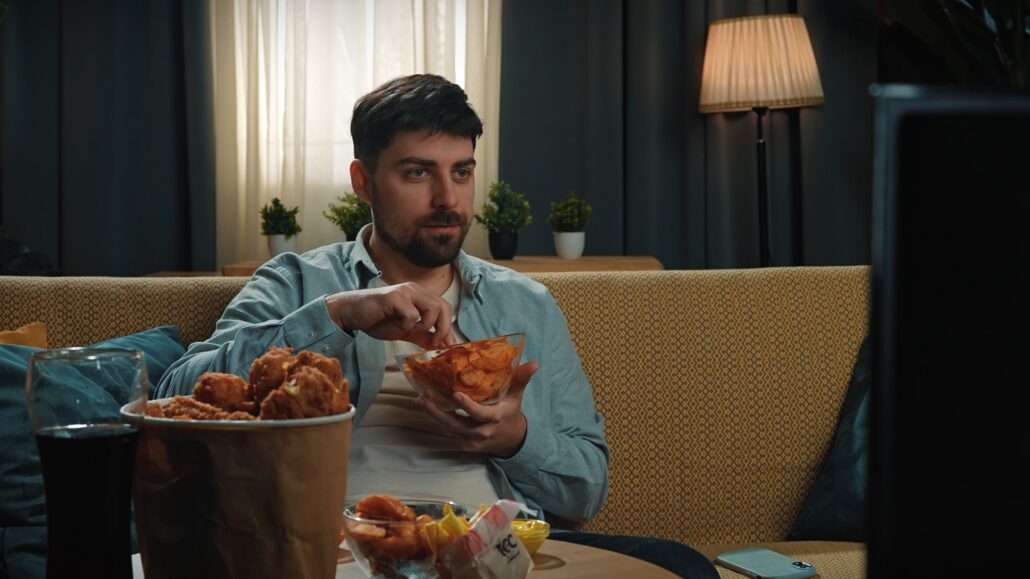
Physical inactivity refers to failing to meet the current WHO recommendation: At least 150 minutes of moderate physical activity or 75 minutes of vigorous physical activity per week.
1.) World Health Organization (WHO). Risk reduction of cognitive decline and dementia: WHO guidelines, second edition. Geneva: World Health Organization; 2026. Licence: CC BY-NC-SA 3.0 IGO. ISBN 978-92-4-012355-7
2.) Thivel, D., Tremblay, A., Genin, P. M., Panahi, S., Rivière, D., & Duclos, M. (2018). Physical activity, inactivity, and sedentary behaviors: Definitions and implications in occupational health. Frontiers in Public Health, 6, 288. https://doi.org/10.3389/fpubh.2018.00288
Why is a lack of physical activity a risk factor for dementia?
| Mechanisms: | Change in blood flow: Irregular physical activity can impair and alter blood flow in the body. This can lead to an increase in blood pressure and a decrease in nitric oxide levels in the blood. This can impair brain function and increase the risk of inflammation in the brain. Reduced brain volume: People who exercise less or are not active at all often have a smaller brain volume than people who engage in moderate to vigorous physical activity several days a week. Reduced production of the protein BDNF (“Brain-Derived Neurotrophic Factor”): It promotes connections between nerve cells (synapses) and improves cognitive abilities. Irisin release: When people don't get enough exercise, their bodies release less of a substance called irisin, which is released during physical activity. This substance may protect the brain from damage. |
1.) World Health Organization (WHO). Risk reduction of cognitive decline and dementia: WHO guidelines, second edition. Geneva: World Health Organization; 2026. Licence: CC BY-NC-SA 3.0 IGO. ISBN 978-92-4-012355-7
2.) Huuha AM, Norevik CS, Moreira JBN, Kobro-Flatmoen A, Scrimgeour N, Kivipelto M, Van Praag H, Ziaei M, Sando SB, Wisløff U, Tari AR. Can exercise training teach us how to treat Alzheimer’s disease? Ageing Res Rev. 2022 Mar;75:101559. doi: 10.1016/j.arr.2022.101559. Epub 2022 Jan 6. PMID: 34999248.
3.) Casaletto KB, Rentería MA, Pa J, Tom SE, Harrati A, Armstrong NM, Rajan KB, Mungas D, Walters S, Kramer J, Zahodne LB. Late-Life Physical and Cognitive Activities Independently Contribute to Brain and Cognitive Resilience. J Alzheimers Dis. 2020;74(1):363-376. doi: 10.3233/JAD-191114. PMID: 32039854; PMCID: PMC7233450.
4.) de Freitas GB, Lourenco MV, De Felice FG. Protective actions of exercise-related FNDC5/Irisin in memory and Alzheimer’s disease. J Neurochem. 2020 Dec;155(6):602-611. doi: 10.1111/jnc.15039. Epub 2020 Jun 2. PMID: 32396989.
5.) Jaberi S, Fahnestock M. Mechanisms of the Beneficial Effects of Exercise on Brain-Derived Neurotrophic Factor Expression in Alzheimer’s Disease. Biomolecules. 2023 Oct 26;13(11):1577. doi: 10.3390/biom13111577. PMID: 38002258; PMCID: PMC10669442.
What can I do?
Regular physical activity is crucial for the health and well-being of adults. Every movement counts and contributes to a healthier life.
Minimum recommendations:
- Endurance Training
- 150 minutes of moderate activity per week (e.g., brisk walking) or
- 75 minutes of intensive activity per week (e.g., jogging) or
- a combination of both.
- Weight training Do muscle-strengthening exercises at least twice a week.
- Movement breaks Regularly interrupt long sitting periods with short movement breaks.
Additional tips:
- If possible, try to integrate movement into your daily life. Take the stairs instead of the elevator, or walk or cycle for daily errands instead of using the car.
- Opt for a combination of different sports activities. A combination of strength training and endurance training is recommended.
- Create new habits. Regular exercise is more important than individual, intensive training sessions.
- Find activities you enjoy and get a workout buddy. This makes it easier to stick with it.
1.) World Health Organization (WHO). Risk reduction of cognitive decline and dementia: WHO guidelines, second edition. Geneva: World Health Organization; 2026. Licence: CC BY-NC-SA 3.0 IGO. ISBN 978-92-4-012355-7
2.) Bundeszentrale für gesundheitliche Aufklärung. Nationale Empfehlungen für Bewegung und Bewegungsförderung (Movement Recommendations_BZgA-Special Issue_3.pdf)