

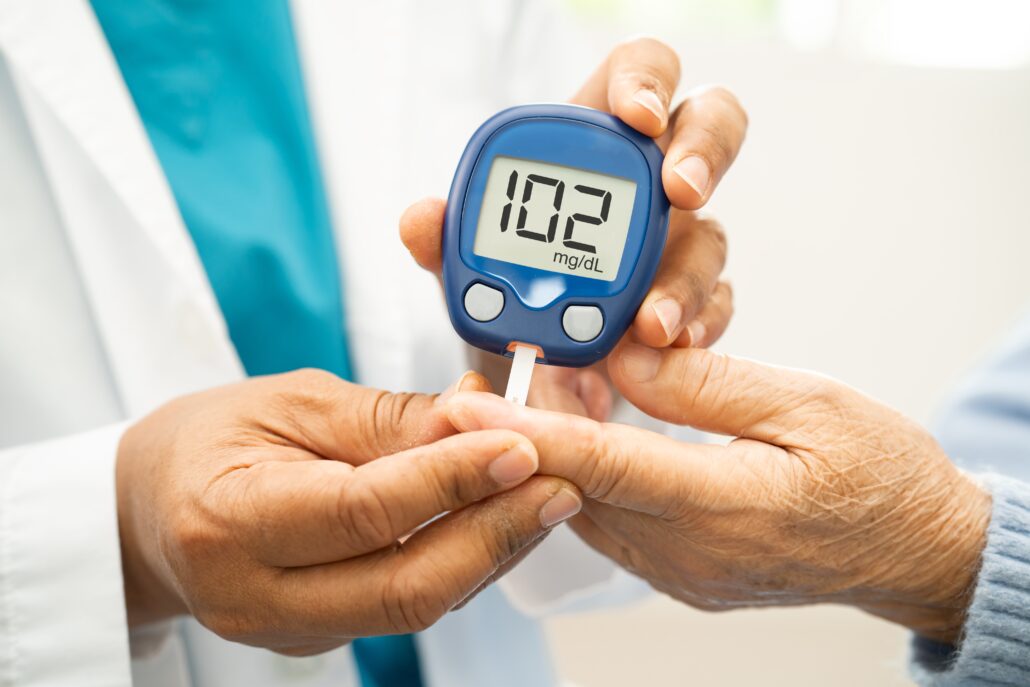
Diabetes mellitus is an umbrella term for various metabolic diseases. All of them have in common that they lead to elevated blood sugar levels.
1.) World Health Organization (WHO). Risk reduction of cognitive decline and dementia: WHO guidelines, second edition. Geneva: World Health Organization; 2026. Licence: CC BY-NC-SA 3.0 IGO. ISBN 978-92-4-012355-7
2.) Bundesministerium für Gesundheit. Diabetes mellitus Typ 1 und Typ 2.
Why is diabetes mellitus a risk factor for dementia?
| Mechanisms: | Diabetes and Comorbidities: People with diabetes often have other risk factors for dementia, such as high blood pressure, high cholesterol, and being overweight. Collectively, these risk factors are also known as metabolic syndrome. Vascular damage: iabetes can cause damage to blood vessels, both large (macrovascular) and small (microvascular). This can lead to brain damage and increase the risk of dementia. Insulin Resistance and the Brain: Insulin resistance, a characteristic of diabetes, can lead to changes in brain metabolism and promote the formation of harmful proteins (amyloid-β, tau) that play a role in the development of Alzheimer's disease. Inflammation: Chronic inflammation, which is common in diabetes, may also contribute to the development of Alzheimer's dementia. |
1.) World Health Organization (WHO). Risk reduction of cognitive decline and dementia: WHO guidelines, second edition. Geneva: World Health Organization; 2026. Licence: CC BY-NC-SA 3.0 IGO. ISBN 978-92-4-012355-7
2.) https://www.alzheimers.org.uk/about-dementia/managing-the-risk-of-dementia/risk-factors-for-dementia
3.) Barbiellini Amidei, C., Fayosse, A., Dumurgier, J., Machado-Fragua, M. D., Tabak, A. G., van Sloten, T., Kivimäki, M., Dugravot, A., Sabia, S., & Singh-Manoux, A. (2021). Association Between Age at Diabetes Onset and Subsequent Risk of Dementia. JAMA, 325(16), 1640–1649. https://doi.org/10.1001/jama.2021.4001
4.) Xue, M., Xu, W., Ou, Y. N., Cao, X. P., Tan, M. S., Tan, L., & Yu, J. T. (2019). Diabetes mellitus and risks of cognitive impairment and dementia: A systematic review and meta-analysis of 144 prospective studies. Ageing research reviews, 55, 100944. https://doi.org/10.1016/j.arr.2019.100944
What can I do?
Basic Therapy
- Lifestyle changes (addressing as many risk factors as possible)
- Education and training (training and treatment programs tailored to specific target groups and topics, as well as self-monitoring of plasma glucose)
- Weight loss (can lead to remission in the early stages of type 2 diabetes)
- Physical activity and sports
- Nutritional therapy and counseling
- Aufrechterhaltung eines normalen Körpergewichts
- Verzicht auf Tabakkonsum
Dietary recommendations for people with type 2 diabetes
- Encouraging a healthy, balanced diet while taking into account the patient's current eating habits
- The consumption of industrially processed foods should be avoided as much as possible, and sucrose intake should be limited (World Health Organization [WHO] recommendation: < 25 g/day). The Deutsche Gesellschaft für Ernährung (DGE) recommends limiting the consumption of monosaccharides and disaccharides to < 10%
- Avoid large portions and frequent consumption of fatty foods, such as fatty meats, sausage, cheese, baked goods, processed foods, fast food, cream, chocolate, chips, etc.
- A selection of plant-based fats, such as oils, nuts, and seeds.
- Enrich meals with dietary fiber, such as vegetables, fresh fruit, and whole grains.
1.) World Health Organization (WHO). Risk reduction of cognitive decline and dementia: WHO guidelines, second edition. Geneva: World Health Organization; 2026. Licence: CC BY-NC-SA 3.0 IGO. ISBN 978-92-4-012355-7
2.) Landgraf, R., Aberle, J., Birkenfeld, A. L., Gallwitz, B., Kellerer, M., Klein, H., Müller-Wieland, D., Nauck, M. A., Reuter, H. M., & Siegel, E. (2019). Therapy of Type 2 Diabetes. Experimental and clinical endocrinology & diabetes : official journal, German Society of Endocrinology [and] German Diabetes Association, 127(S 01), S73–S92. https://doi.org/10.1055/a-1018-9106