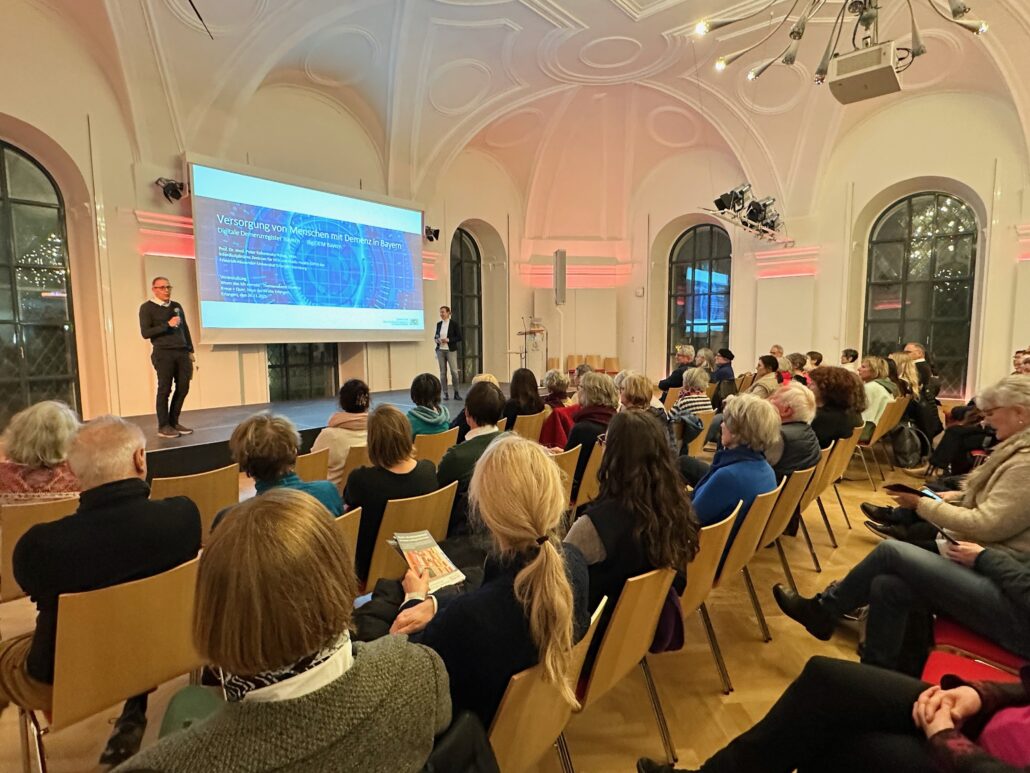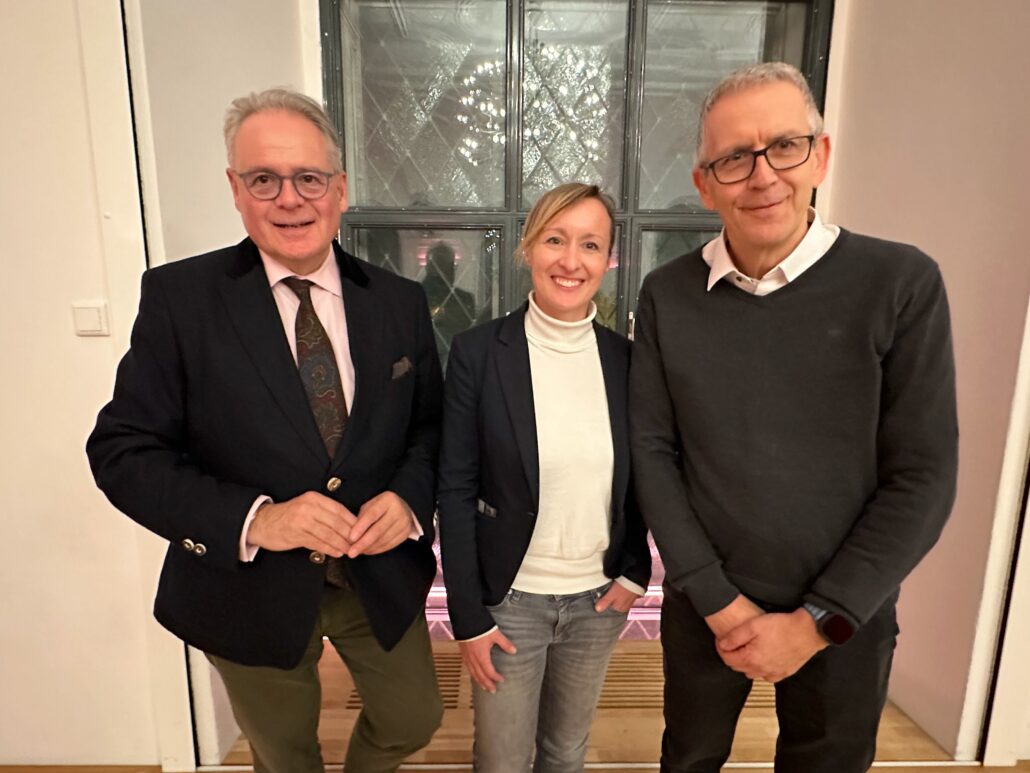
Dementia affects many of us – directly or indirectly. But what happens when one's own self slowly „travels away“? How can those affected and their loved ones be helped? Prof. Dr. Christoph Ostgathe, Head of the Palliative Medicine Department at Erlangen University Hospital, and Dr. Caroline Hack, Head of the Clinical Ethics Staff Department at Erlangen University Hospital, invited people to an evening of reflection, exchange, and understanding at „Kreuz + Quer“ (House of the Church) in Erlangen. Numerous citizens, those affected, and professionals attended: The Katharinensaal was fully occupied.
To kick things off, Prof. Dr. Peter Kolominsky-Rabas from the Interdisciplinary Center for Health Technology Assessment and Public Health (IZPH) at Friedrich-Alexander-Universität Erlangen-Nürnberg gave insights into the topic of dementia. The care researcher and digiDEM Bavaria project lead stated: „Two-thirds of people with dementia are cared for at home. Therefore, family caregivers can certainly be called Germany's largest care service.“
Early detection of dementia is important
In his expert presentation, the neurologist emphasized the importance of early dementia detection. „From the first symptoms to diagnosis, it takes up to a year and a half until half of people with cognitive impairments even receive a diagnosis. That's a problem.“ Because if dementia is detected early, it allows for timely care planning, which also relieves the burden on caregivers and relatives. At the same time, Prof. Dr. Peter Kolominsky-Rabas stressed: „45 percent of the risk factors that promote the development of dementia can be actively influenced.“ Risk factors include, for example, declining hearing and vision, and social isolation.
Touching play about Alzheimer's dementia
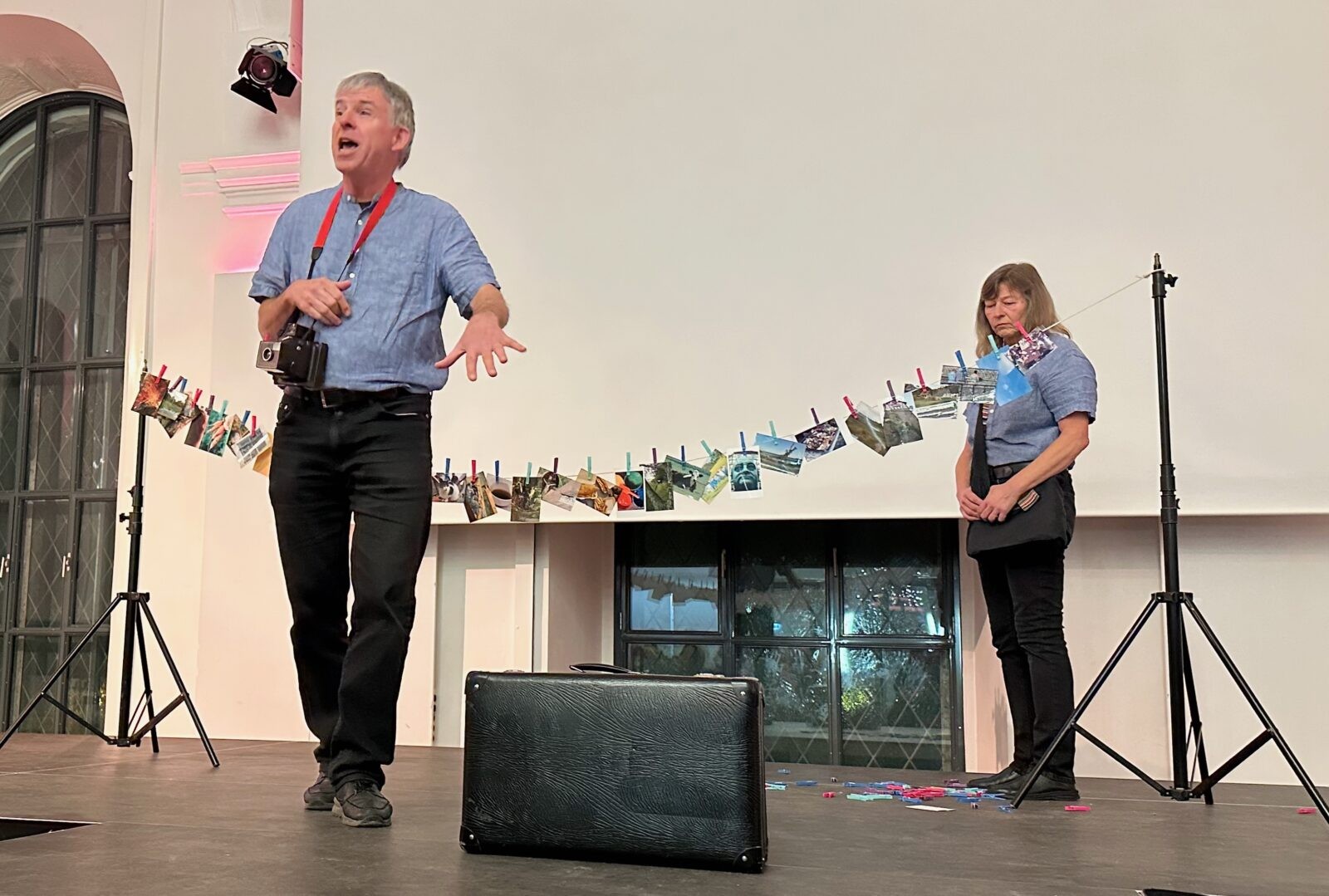
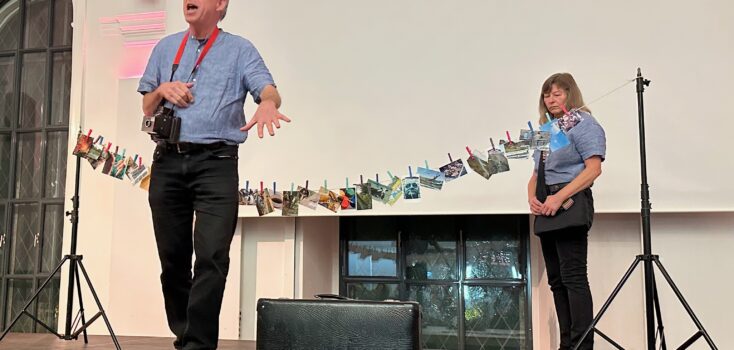
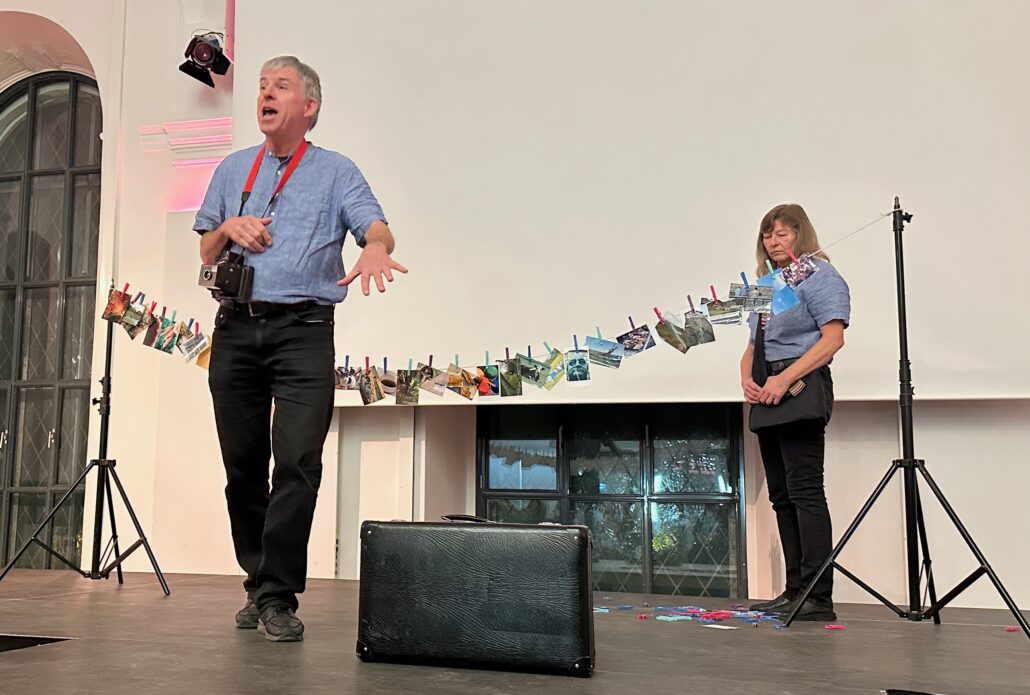
Then it was „curtain up“ for the theater „DAS BAUMANN“ from Kulmbach. In the self-developed play „The ego travels“ showed author and director Rüdiger Baumann and actress Birgit Baumann, how normal age-related forgetfulness can develop into dementia, robbing people of their memories. Uncertainty, anxiety, and even aggression can be consequences. Since 2014, DAS BAUMANN has been performing this moving and touching play about Alzheimer's dementia upon request. The 30-minute play was created at the request of the Alzheimer's Society Kulmbach to bring the topic of dementia to the stage.
Exchange and understand
Skillfully and knowledgeably moderated by Prof. Dr. Christoph Ostgathe, Head of the Palliative Care Department at Erlangen University Hospital, and Dr. Caroline Hack, Head of the Clinical Ethics Staff Department at Erlangen University Hospital, numerous guests at the dementia evening event finally take the opportunity to ask experts from medicine, nursing, and ethics questions in an open forum. What can be done when a person with dementia still wants to drive? How can one cope with the burdens of home care? What solutions are there, for example, to best care for and look after one's mother who has dementia?
Mutual support and advice
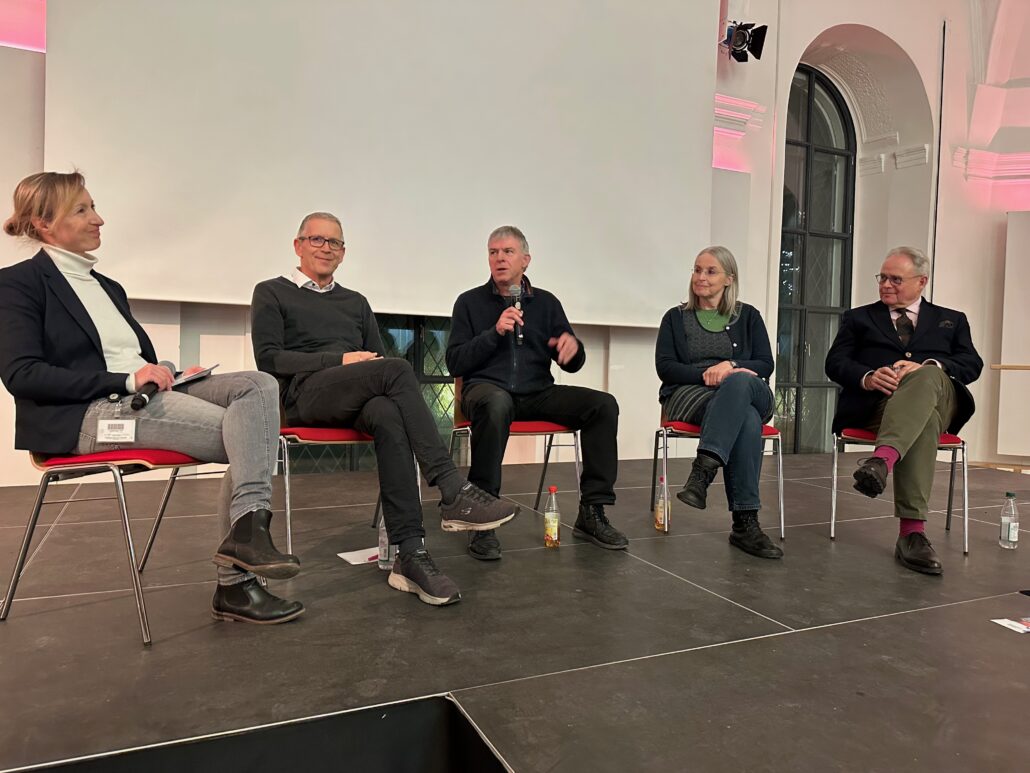
Prof. Dr. Christoph Ostgathe, Dr. Caroline Hack, Friederika Leuthe, a certified nursing administrator and long-time head of the Erlanger Bodelschwingh-Haus, Prof. Dr. Peter Kolominsky-Rabas, and theater professional Rüdiger Baumann competently answered questions. The experts agreed on what can be helpful: exchanging experiences with other caregivers and family members, mutual support, and above all, consultation with professional facilities specializing in dementia.
Our tip: A healthy lifestyle can prevent many illnesses and also help delay the development of dementia. Therefore, it is important to know the risk factors for dementia and how they can be changed. With the digital Prevention Coach® from digiDEM Bavaria In a few steps, you can learn about your own dementia risk factors. Discover how to achieve a lot for your mental health with little effort. Use our practical and evidence-based tips for dementia prevention.
Here is the digital prevention coach® from digiDEM Bayern.