

Encouragement through proactive care and treatment planning

Eine spezielle Schulung kann die Pflegenden von Menschen mit Demenz, die in Pflegeheimen leben, ermutigen. Denn ein Team von internationalen Forschenden hat gezeigt, dass das „mySupport“-Programm sich positiv unter anderem auf Entscheidungsfindungen auswirkt. Wer Menschen mit Demenz pflegt, übernimmt eine große Verantwortung. So müssen zum Beispiel stellvertretend wichtige Entscheidungen getroffen …

The move can wait.

Successful case management, also referred to as care management in German, with need-oriented care can delay the move of people with dementia into a nursing home. This is the conclusion reached by three of our colleagues at the Interdisciplinary Center for Health Technology Assessment (HTA) and Public Health (IZPH) at Friedrich-Alexander-Universität Erlangen-Nürnberg. The study was published...

„Striving for fairer measures“

Sterblichkeitsrate, Arztbesuche oder Krankenhausaufenthalte: Inwiefern spiegeln sich Unterschiede in der Qualität der Demenzversorgung auf dem Land und in der Stadt in der wissenschaftlichen Literatur wider? Forschende aus Kanada haben Unterschiede herausgefunden. Kanadische Forschende wollten es ganz genau wissen: Inwiefern spiegeln sich Unterschiede in der Qualität der Demenzversorgung auf dem Land …

Early-onset dementia

When dementia occurs in people under the age of 65, it is referred to as early-onset dementia. It not only presents with medical and psychological particularities but also entails specific nursing care needs. In contrast to people with late-onset dementia, the disease progresses more aggressively, and cognitive decline advances more rapidly. Often, ...

Parkinson's Dementia: Comprehensive Symptom Assessment

Around one-third of Parkinson's patients are affected by dementia. This requires individualized treatment, especially when, for example, motor or psychological symptoms and cognitive impairments occur. Around one-third of Parkinson's patients are affected by dementia. To address the specific needs of patients and their caregivers with individualized…

Structured approach reduces depression and stress

Depressive symptoms and stress in caregivers, as well as behavioral symptoms in people with dementia, can be reduced. One approach for this is the so-called DICE strategy. Anxiety, depression, apathy, or wandering – dementia-related neuropsychiatric symptoms (NPS) are a major challenge for people with dementia, their family members, and caregivers. NPS lead to a higher...

Dementia prevention reduces risks

Up to 40 percent of dementia cases are linked to risk factors that can be changed. These include, for example, lifestyle, stress, diet, and vascular diseases. The preventive potential is therefore significant. Closing existing knowledge gaps about risk factors also has a preventive effect. A Finnish long-term study has revealed a number of positive...

Support without medication

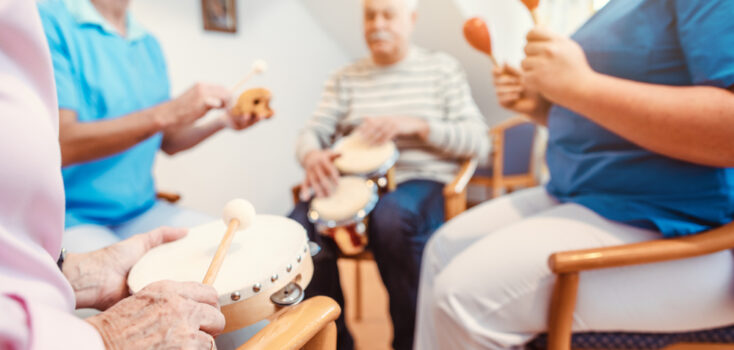
An increasing number of scientific studies demonstrate the success of non-pharmacological measures for people with dementia in the context of post-diagnosis care. „Nihilism, despair, and inaction have no place after a dementia diagnosis.“ This is the conclusion reached by the authors of an article in the World Alzheimer Report 2022. Even those who receive a dementia diagnosis...