


Familiarity and a sense of belonging instead of stigma and shame: As dementia progresses, it becomes increasingly difficult for those affected and their caregivers to participate in social life. Yet, participation in social life strengthens those affected.
No longer going to club meetings, concerts, or birthday parties: people with dementia gradually withdraw more and more from social life. However, recent studies show that they do not visit fewer places, but rather visit places that serve medical care, for example, instead of cultural or social meeting points. Certain areas outside the home – such as the neighborhood – play a particularly important role.
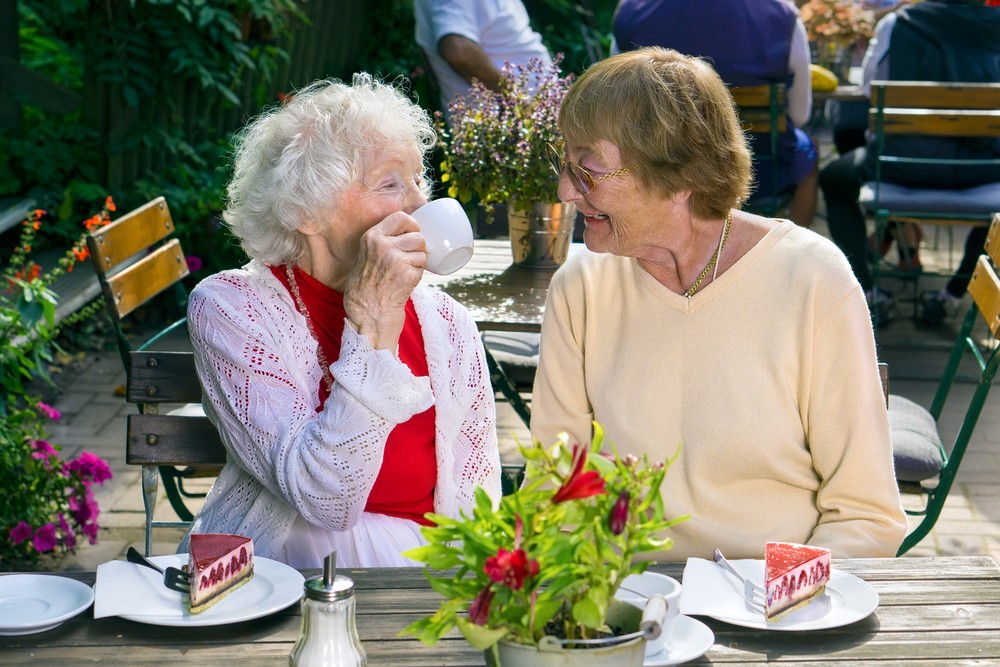
These are places where affected individuals are active and, as a result, build a relationship with that environment. They become part of their own world, create identity, and provide meaning. „By maintaining and participating in the community, people with dementia develop a sense of familiarity and belonging to their living space and to meaningful places such as the local grocery store, park, or café,“ states the World Alzheimer Report 2022.
„Being there“ prevents depression.
It is scientifically proven that people with dementia value social participation. This is because they are physically active, have contact with nature, or can interact with other people. Affected individuals feel a sense of belonging and connection to their surroundings. Taken together, social participation also has other positive effects: „being there“ helps prevent depression, reduces anxiety, and strengthens one's identity and self-esteem.
By participating in social life, people with dementia create new „territories“ where they feel safe. The inclusion of everyday objects such as keys, a wallet, and an umbrella is also of great importance here. They create a connection to home and thus embody further familiarity outside of domestic areas.
Caregivers and healthcare professionals are therefore tasked with „supporting and maintaining community participation through repeated visits to meaningful places,“ as stated in the World Alzheimer Report 2022, „to facilitate the participation of people with dementia in the community.“
Here is the original post World Alzheimer Report 2022 on pages 204 to 205.