

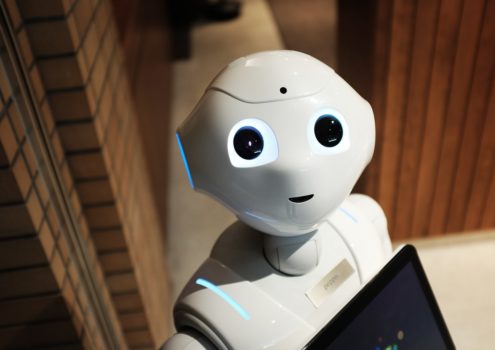
Conversations between people with dementia and robots – this image evokes an uneasy feeling in many. However, a study has come to positive results: Especially through the use of conversational strategies, the participants enjoyed the conversations with robots and were even encouraged to have longer conversations.

In principle, the authors believe robots have the potential to assist people with dementia in non-pharmacological ways. However, conversations with people with dementia are often challenging. For their study, published in the journal Dementia and Geriatric Cognitive Disorders When it was published, the researchers used communication strategies that were originally developed for interpersonal contact with people with dementia and had proven successful there. They implemented these strategies in robots.
More and longer conversations when implementing conversation strategies
The scientists conducted their A/B test analysis with twelve individuals with mild to moderate dementia, who were an average of 80 years old. They attended 23 group sessions that incorporated talk therapy and music, both delivered by robots. The focus of the analysis was on direct communication between the individuals with dementia and the robot, and whether they noticeably enjoyed the intervention.
In the results, people with dementia communicated significantly more often when the robot had conversation strategies. In addition, the conversations lasted longer. Furthermore, the affected individuals enjoyed the conversations with the robot just as much as listening to music.
The authors conclude that the use of conversational strategies helps to enhance the interaction between people with dementia and robots. They believe the results demonstrate the importance of implementing such strategies in robots that support the care and social stimulation of people with dementia.
More information is available here: