

Group singing brings joy, orientation, and social connection to people with dementia – A current review shows how singing programs can be designed to be particularly effective.
Singing connects people – and that's especially true for those whose memory is slowly fading. A current review examined 23 studies worldwide to find out how „group singing“ can best be designed for people with cognitive impairments and dementia. The goal: to promote well-being and social contact.
Typical process and target audience
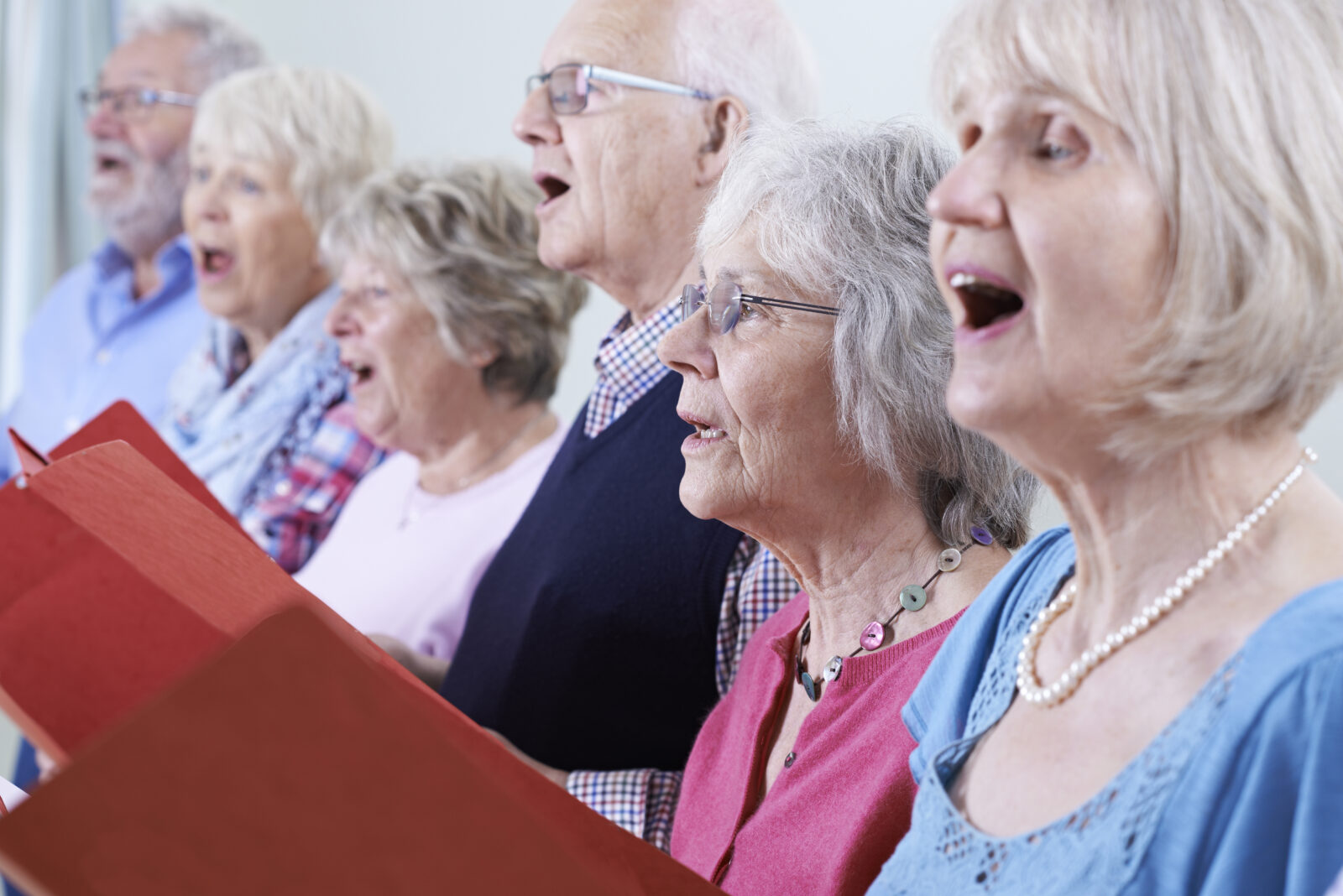
The studies examined clearly showed that the participant structure was often similar. The groups primarily consisted of women with an average age over 70. A typical offering usually took place once a week and lasted on average about 78 minutes. The total duration often extended over two to three months, resulting in a total of about 14 joint sessions. The review found that such singing groups are not necessarily led by music therapists; choir directors or professional musicians also successfully took on the moderation.
What makes a singing group effective
The content design of the sessions clearly highlighted success factors for practical application. Almost all groups started with welcoming rituals such as welcome songs and physical or vocal warm-up exercises. Singing familiar songs formed the core of the sessions, with classics like „Edelweiss“ or well-known folk songs being particularly popular. To promote the participants' independence, they were actively involved in song selection in many cases. In addition to music, the social component played a crucial role: nearly half of the studies incorporated dedicated times for social interaction, for example, in the form of a shared tea break.
Music offerings for people with dementia are valuable – but their effect on depressive symptoms depends heavily on context, target group, and implementation.
Another large international study involving over 1,000 nursing home residents in six countries examined the effects of group music therapy and communal choir singing on (mental) well-being. The therapy lasted for six months. The result: Overall, there were no significant improvements in depressive symptoms compared to usual care – nor in quality of life or cognitive abilities. At the same time, a differentiated picture emerged: the offerings had different effects in individual countries. Short-term positive effects were observed in people with moderate to severe dementia. And those who participated regularly benefited more – at least after three months.
Music doesn't automatically work the same everywhere. Context, quality of execution, and target audience are crucial. However, well-guided, regular, and biographically fitting music offerings remain valuable – not as a substitute for depression treatment, but as a source of activation, emotional moments, and community.
Tipp für die PraxisA combination of fixed rituals, familiar songs, and space for sociability creates an environment that offers orientation and can sustainably improve quality of life. However, when using or offering this, pay attention to the personal musical preferences of the participants. Musical taste also changes with each generation.
Hier geht’s zur Studie:
Group singing in cognitive decline – what it is and how it is done. A systematic search and review