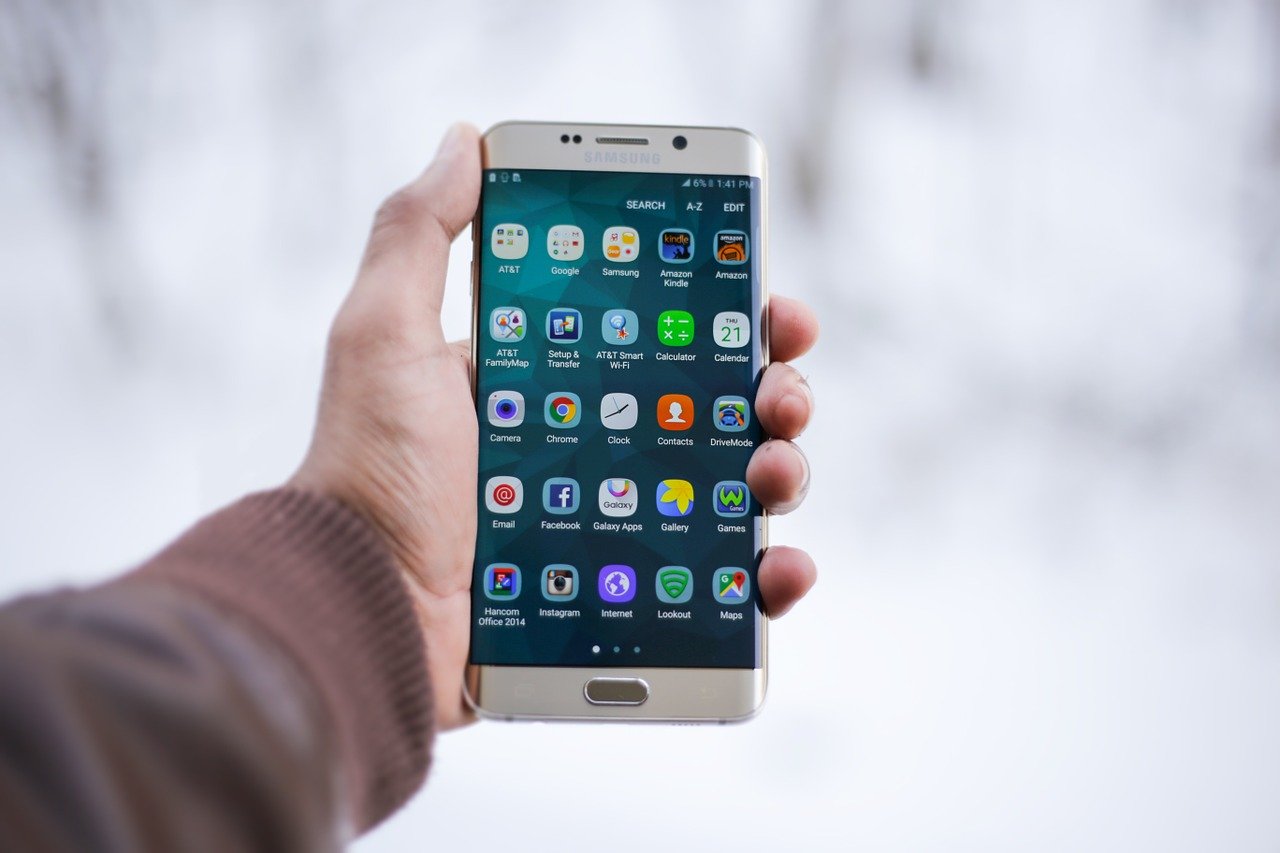

They are currently being widely discussed: The so-called „Covid-19 trackers.“ These are apps designed to track and, if possible, break the chains of infection of the virus using contact tracing data. In our webinar, we will explain, on the one hand, how person tracking works in the context of Covid-19. On the other hand, we will address GPS trackers for people with dementia and highlight parallels between both forms of person tracking. You can watch the webinar again here. We look forward to your feedback in the comments!
Here is the webinar as PDF for download.
Participant Questions and Webinar Team Answers:
The incubation period, the time from infection to the onset of illness, is an average of five to six days. If you have symptoms, you are contagious. However, you can be contagious up to two days before the first symptoms appear. It is also possible to have very mild or no symptoms and still be contagious without realizing it. This means that infected individuals without symptoms can transmit COVID-19. The coronavirus is a novel pathogen, and there is currently no sufficiently reliable data or studies available. For this reason, many questions regarding transmission, duration of illness, and protection options remain unanswered. https://www.infektionsschutz.de/coronavirus/fragen-und-antworten/ansteckung-und-uebertragung.htmlUnder the mentioned source, as well as on the pages of the Robert Koch Institute (https://www.rki.de/SharedDocs/FAQ/NCOV2019/gesamt.html) you will find further information.
Virtual boundaries can be set using GPS. Virtual „fences“ can be drawn on internet-based maps.https://www.hippocampus.de/media/316/cms_5dfbae2f95a5e.pdfObstacles can therefore be excluded from the habitual space. However, a habitual space cannot prevent a certain area from being entered. The localization system can only inform that the habitual space has been left by the person with dementia and communicate their current location.
How often the GPS tracker needs to be charged with power can vary depending on the tracker used. Many GPS trackers have a battery life of four to five days. For example, SmartSole has an operating time of up to 5 days on a single charge, with approximately 6-8 hours of movement per day.https://www.protegear.de/produkte-tarife/medizinische-tracker-für-alzheimer-demenz/).
This is a study by Oderud and colleagues, which examined the benefits of various GPS tracking systems with 208 people with dementia and their relatives over a three-year period in Norway:
The use of a tracking system must be decided on an individual basis, and a balance must always be struck between monitoring and protecting. The tracking of individuals is only permitted with personal consent according to the Federal Data Protection Act.https://www.deutsche-alzheimer.de/fileadmin/alz/forschung/abschlussbericht_vodino.pdf). A 2017 review discusses and provides recommendations on liberty, privacy, personal dignity, autonomy, and benefits (https://www.jabfm.org/content/jabfp/30/2/258.full.pdfWhen deciding on a location tracking system, the balance between autonomy and safety must always be found in consultation with the person concerned.
The cost of the SmartSole is on the website.https://www.protegear.de/produkte-tarife/medizinische-tracker-für-alzheimer-demenz/to view.
Unfortunately, we cannot answer this question. Generally, care services in your municipality or care associations can help you with such questions. The following link, for example, provides information about care associations and a directory of care associations in Bavaria:https://www.stmas.bayern.de/betreuungsvereine/index.php).
In addition, the ones in the source (https://www.jabfm.org/content/jabfp/30/2/258.full.pdf) the recommendations listed previously should be taken into account.
Wednesday, 06/03/2020, 11:00 AM - 11:30 AM

Anna Kirchner
Research Associate, M.Sc.Presentation and Moderation

Nikolas Dietzel
Research Associate M.A.Support Chatroom & Questions
In the webinar „How does people tracking work? (e.g., for dementia, Covid-19)“ we will learn the basic functionality of „contact tracing“. Such applications were used to mitigate the spread of Covid-19 in South Korea and Taiwan and are also being heavily discussed in this country. Furthermore, we will deal with GPS tracking for people with dementia and point out parallels to contact tracing.
With the webinar series „Science Watch LIVE,“ we offer an additional service to our monthly newsletter digiDEM Bavaria Science Watch, where we provide scientific findings from dementia research.
Against the backdrop of widespread half-truths and fake news, currently, for example, concerning the new coronavirus, evidence-based science is in demand. It is more important than ever to communicate scientific findings in a way that is understandable to society and to promote an exchange about them. This is what we at the digiDEM Bavaria project team would like to contribute to, now also with digiDEM Bavaria Science Watch LIVE.