

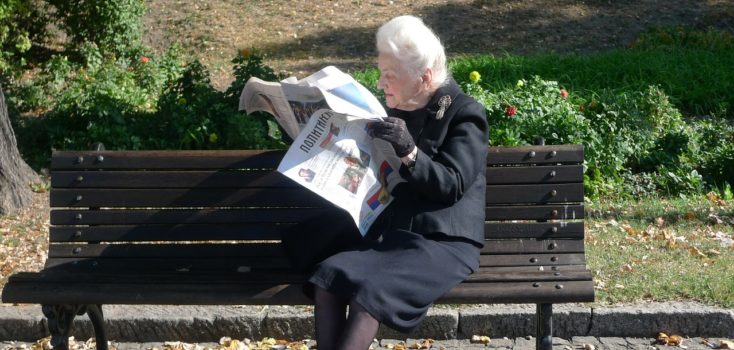
Reading newspapers, solving crossword puzzles, or learning a new language – mentally stimulating leisure activities can reduce the risk of developing dementia in old age, according to studies. The question is: what exactly helps the most, and which hobby should one perhaps take up? A recent study from Great Britain is addressing this question.
The background to the work of Pamela Almeida-Meza of University College London and her team is the great importance of lifestyle for the prevention of dementia. Studies have consistently shown for years that a A healthy lifestyle can significantly reduce the risk of dementia.. Factors that can be protective include, for example, a healthy diet, sufficient exercise, timely treatment of hearing loss – and the so-called “cognitive reserve.” This refers to all mentally stimulating activities that exist throughout life. Its development begins in childhood and continues later, for example, through work, social interaction, hobbies, further education, and much more. This cognitive reserve, which can protect against the development of dementia, forms the starting point for the current study.

What influence do leisure activities and marital status have?
The authors focused on intellectual and social leisure activities, as these contribute to cognitive reserve. They examined, on the one hand, the influence of individual activities on the risk of dementia, and on the other hand, possible differences between genders and marital status.
For their study, the authors were able to draw on extensive data from English Longitudinal Study of Ageing rely on, which has been collecting data since 2002 on the living conditions of the population in England aged 50 and over. They analyzed the data from 8,030 individuals who had participated in surveys between 2002 and 2017. 56 percent of them were women, 44 percent men. At the beginning of their respective surveys, they were on average just under 64 years old.
13 intellectual or social leisure activities
Leisure activities were divided into two categories: intellectual and social. Participants indicated whether and how often they engaged in each activity. Intellectually stimulating activities included, for example: reading the newspaper, having a hobby, using a mobile phone, using the internet or email, and attending art or music groups. Social activities included, for example, membership in sports clubs, attending church groups, caregiving responsibilities (e.g., looking after grandchildren), involvement in clubs or volunteer work, meeting with friends, and holidays or day trips.
The researchers assessed the participants' cognitive state using a combination of self-reports, medical diagnoses, and information from relatives.
Dementia: More common with lower education and fewer leisure activities
During the study period, 412 participants developed dementia, and 2,192 individuals passed away. Researchers found that those who developed dementia were older, had lower educational attainment, were more frequently widowed, and had multiple comorbidities at the start of the study. Additionally, this group of individuals engaged in fewer intellectual and social leisure activities than participants who did not develop dementia.
Marital status also played a role: The results showed that increased intellectual activities lowered the risk of dementia in married participants, but not in those who were single, divorced, or widowed. Hobbies, in particular, reduced the likelihood of developing dementia in married individuals.
The examination of individual leisure activities also showed differences between the genders: among women, reading newspapers had a positive effect on the risk of dementia, while among men, it was the use of mobile phones.
Leisure activities for cognitive reserve protection
According to the authors, these findings confirm a number of earlier studies. “Cognitively stimulating leisure activities such as reading, solving puzzles, and learning experiences can protect the brain by improving and maintaining its flexibility and adaptability, which directly contributes to cognitive reserve.”
From the authors' perspective, the influence of gender and marital status on the association between leisure activities and dementia risk should be further researched in order to develop the most appropriate measures for protecting cognitive reserve.
Here you will find the complete study:
Is Engagement in Intellectual and Social Leisure Activities Protective Against Dementia Risk? Evidence from the English Longitudinal Study of Ageing February 21