
Reduce home care costs 

„More at Home with Dementia“ is a Dutch, multi-part training program for co-residing informal caregivers of people with dementia. Researchers at the University of Groningen have evaluated the cost-effectiveness of the program. The total costs for dementia care in the Netherlands in 2017 amounted to 9.5 percent of total healthcare costs. To assess cost-effectiveness...

Higher risk of death and dementia due to social isolation 

The social integration of older adults should be given higher priority. This is the wish of the authors of a Swedish study. In it, they investigated the connection between loneliness and social isolation with mortality. The Corona pandemic and the associated restrictions have made many people realize the consequences of loneliness and social isolation…

Researchers from China are tracking the number of people worldwide with MCI

Chinese researchers worldwide investigated the prevalence of mild cognitive impairment (MCI) in the general population at a specific point in time. In their review, they analyzed data from 66 studies with more than 242,000 participants. According to their findings, the prevalence, meaning the frequency of MCI, was...
The Right to (Not) Know a Dementia Diagnosis from a Medical-Ethical Perspective

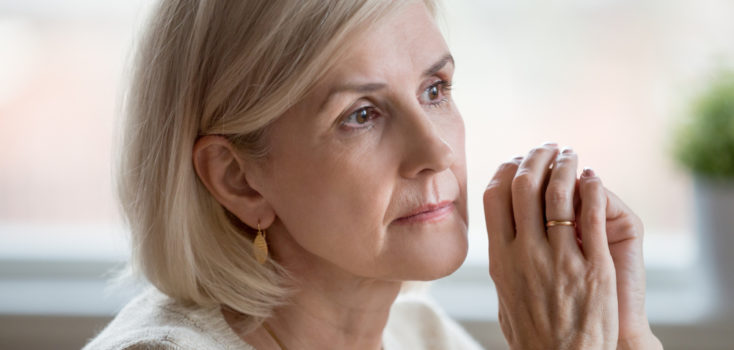
There is no cure for dementia diseases yet. Only the symptoms of dementia can be favorably influenced by non-pharmacological and pharmacological means. Therefore, the question arises whether those who may be affected should seek information about their own dementia diagnosis or not. There are scientific reasons that speak in favor of a timely diagnosis. This way, those affected can...

Own Symposium at the 11th Congress of the German Alzheimer's Association: digiDEM Bayern Presents Latest Study Results

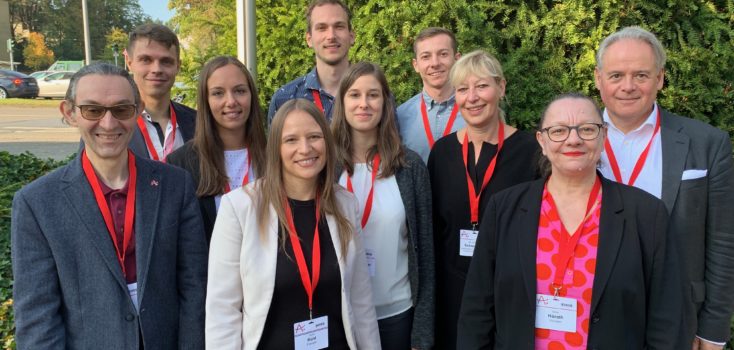
The digiDEM Bavaria symposium at the 11th Congress of the German Alzheimer's Association in Mülheim an der Ruhr attracted keen visitor interest. Scientists Jana Rühl, Anne Keefer, Nikolas Dietzel, and Michael Zeiler presented the latest research findings from health and care research in the field of dementia. After a long pandemic break, it was that time again: ...

Own Symposium at the 11th Congress of the German Alzheimer's Association: digiDEM Bayern Presents Latest Study Results

The digiDEM Bavaria symposium at the 11th Congress of the German Alzheimer's Association in Mülheim an der Ruhr attracted keen visitor interest. Scientists Jana Rühl, Anne Keefer, Nikolas Dietzel, and Michael Zeiler presented the latest research findings from health and care research in the field of dementia. After a long pandemic break, it was that time again: ...

Webinar: The Right to (Not) Know a Dementia Diagnosis from a Medical Ethics Perspective

There is no cure for dementia diseases yet. Only the symptoms of dementia can be favorably influenced by non-pharmacological and pharmacological means. Therefore, the question arises whether those who may be affected should seek information about their own dementia diagnosis or not. There are scientific reasons that speak in favor of a timely diagnosis. This way, those affected can...

Symposium Teil III Inanspruchnahme von Unterstützungsangeboten

Hintergrund: Ein wichtiger Ausgangspunkt, um die Versorgung von Menschen mit kognitiven Beeinträchtigungen und deren Angehörigen in Zukunft verbessern und ausbauen zu können, ist die Kenntnis der Inanspruchnahme bzw. Nicht-Inanspruchnahme von Angeboten, welche die Betroffenen entlasten bzw. unterstützen können. Die internationale Literatur zeigt, dass die Inanspruchnahme meist gering ist, obwohl verschiedene …

Symposium Teil II Belastung und gesundheitsbezogene Lebensqualität pflegender Angehöriger

Hintergrund: Demenz gilt als einer der Hauptauslöser für die Pflegebedürftigkeit älteren Menschen [1][2]. Die Pflege wird dabei zu etwa 70% von Angehörigen in der häuslichen Umgebung geleistet [2]. Pflegende Angehörige gelten deshalb auch als „Deutschlands größter Pflegedienst“ [3]. Für pflegende Angehörige kann sich die Pflegesituation als Belastung darstellen, wodurch diese …

Symposium Teil I Erreichbarkeit von Gedächtnisambulanzen

Hintergrund: Demenzerkrankungen werden nach wie vor zu wenig diagnostiziert. Eine Studie aus Mecklenburg-Vorpommern zeigt, dass im primärärztlichen Bereich bei 60 % der positiv auf Demenz gescreenten Personen keine formale Demenzdiagnose vorlag [1]. Damit Therapie- und Unterstützungsangebote von Menschen mit Demenz in Anspruch genommen werden können, ist eine Diagnosestellung unabdingbar. Gedächtnisambulanzen …