Volunteering strengthens one's own cognitive abilities

Volunteering in your free time feels good: it strengthens cohesion in a club, helps the environment, and supports older people, for example. What had hardly been scientifically investigated until now is the health benefit for the volunteers themselves. A research team from FAU Erlangen-Nürnberg and the Bavarian Digital Dementia Register (digiDEM Bayern) has...

digiDEM Bavaria at the 2nd Bavarian E-Health Congress in Augsburg

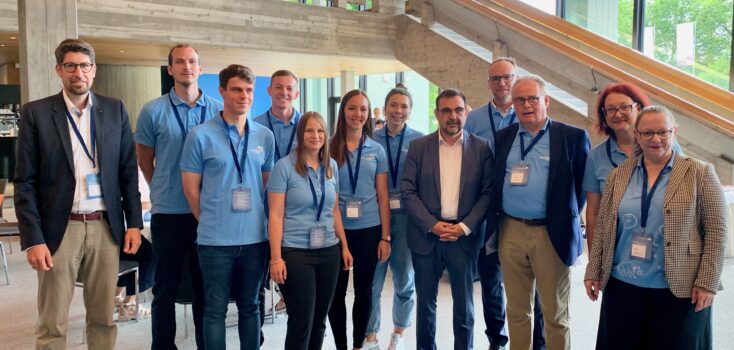
At the 2nd Bavarian E-Health Congress in Augsburg, digiDEM Bayern was also present as an example of a digital project funded by the Bavarian State Ministry of Health and Care. At the digiDEM Bayern booth, Klaus Holetschek, Bavarian State Minister of Health and Care, learned about the latest digital offering, the online questionnaire „digiDEM Bayern DEMAND®“. The second Bavarian E-Health Congress took place...

Our new video: the digiDEM Bavaria DEMAND® questionnaire

Watch our new video for caregivers and family members.

Recognizing one's own needs and seeking help – as dementia progresses, the need for care also increases. Family caregivers and relatives often face a great challenge. How can the increasing need for care be met? Various support services can help.

But what services are even available? What assistance is needed in which situation? The digiDEM Bayern DEMAND® questionnaire helps caregivers and relatives to recognize their own support needs. The questionnaire refers to 16 selected support services. Individual needs are summarized on one page and can be printed out. This forms the basis for further consultation, for example, by specialized centers for caregivers. Take 15 minutes to assess your own support needs.

Webinar: Digital Biographical Work with People with Dementia

A dementia illness means that those affected gradually lose memories of their own lives. Initially, those affected forget current situations, but as the illness progresses, memories of images and events from their past also fade. These losses can change the perception of one's own self-image.

To help people with dementia remember significant life events, they often need support. They need listeners who engage with their life story and identity and try to help them recall it. People with dementia can experience security, self-respect, joy, and well-being during this search for traces. But the question arises: How can relatives or even strangers empathize with the life stories of those affected when only fragments, sometimes without connection, can be remembered and expressed? One possibility is the use of digital applications, for instance, using tablets to research and visually represent life events online together.

In the upcoming webinar, Petra Dlugosch will present her scientific work on digital biographical work for people with dementia. As a Gerontologist M.Sc. and certified social pedagogist, Petra Dlugosch has been working in dementia care for many years. Among other things, she established and managed the specialist center for caregivers of people with dementia and the dementia service center in Kitzingen, Lower Franconia. In the upcoming webinar, she will present the results of her scientific work and various practical implementation possibilities.

Tuesday, 07/11/2023, 11:00 AM – 11:45 AM
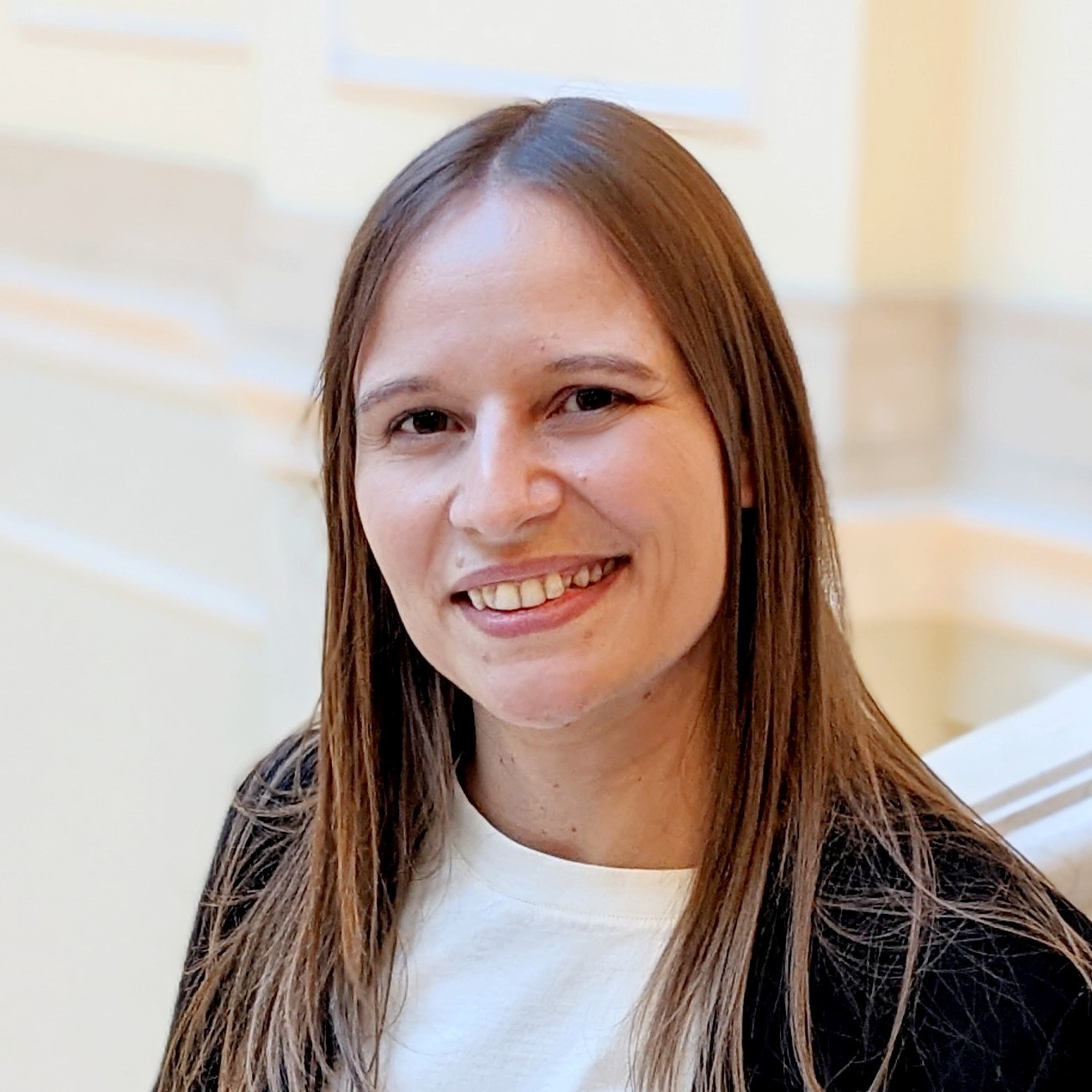
Jana Rühl

Research Associate, M.Sc.

Moderation

Anne Keefer

Research Associate, M.Sc.

Chatrooms and Support

Was kostet Demenz?

Mehr als die Hälfte der Kosten, die Demenz weltweit verursacht, fällt auf Leistungen zurück, die von pflegenden An- und Zugehörigen erbracht werden. Auch weitere beeindruckende Erkenntnisse haben Wissenschaftler*innen in einem „Kostenmodell für Demenz“ im Auftrag der Weltgesundheitsorganisation (WHO) zusammengefasst. Für die Gesellschaft und die Gesundheitssysteme stellt Demenz eine große Herausforderung …

Experiencing the positive in caregiving as well

Wenn An- und Zugehörige Menschen mit Demenz pflegen, erleben die Betreuenden nicht nur Stress oder das Gefühl mangelnder Anerkennung. Vielmehr erfahren sie auch Positives. Dies hat ein Forschungsteam des Uniklinikums Erlangen und der Friedrich-Alexander-Universität Erlangen-Nürnberg (FAU) in einer aktuellen Studie wissenschaftlich belegt. Pflege muss nicht immer belastend sein. Sie kann auch ihre positiven …

Encouragement through proactive care and treatment planning

Eine spezielle Schulung kann die Pflegenden von Menschen mit Demenz, die in Pflegeheimen leben, ermutigen. Denn ein Team von internationalen Forschenden hat gezeigt, dass das „mySupport“-Programm sich positiv unter anderem auf Entscheidungsfindungen auswirkt. Wer Menschen mit Demenz pflegt, übernimmt eine große Verantwortung. So müssen zum Beispiel stellvertretend wichtige Entscheidungen getroffen …

Why Care Courses Are Helpful

The importance of care courses is shown by a current study from Taiwan. Researchers found in an observational study: If caregivers are trained, this can reduce the number of visits by dementia patients to the emergency room and the frequency of hospital stays. Dementia is a complex illness that challenges caregivers on the one hand. On the other hand, it leads to cost increases...

The move can wait.

Successful case management, also referred to as care management in German, with need-oriented care can delay the move of people with dementia into a nursing home. This is the conclusion reached by three of our colleagues at the Interdisciplinary Center for Health Technology Assessment (HTA) and Public Health (IZPH) at Friedrich-Alexander-Universität Erlangen-Nürnberg. The study was published...