
Ready for the dementia test?

Researchers from China found that 62 percent of surveyed older high-risk individuals were willing to participate in dementia screening. However, only 12 percent actually underwent the test. The researchers cited psychological factors as the explanation for this discrepancy. Almost 40 percent of dementia cases can be prevented or...
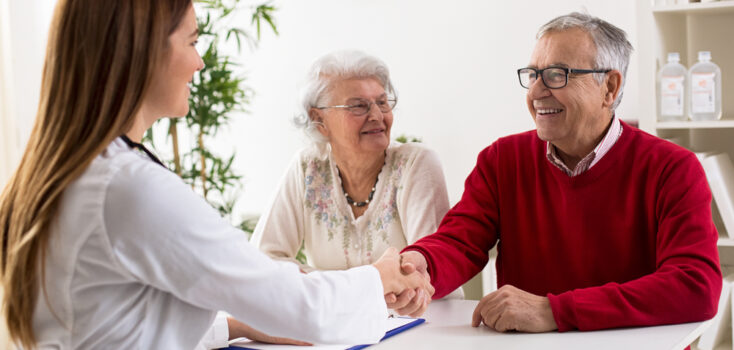
Tested for dementia – now what?

Dementia prevention at the municipal level – how can it succeed? A study from the USA investigated how older people deal with their test results and the information they received after the test. More than half of the study participants shared their screening results with their families, and a good third informed...

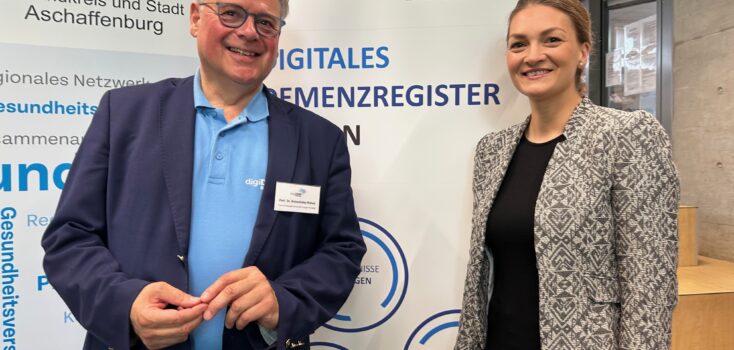
Bavaria's Minister of Health Judith Gerlach at the Dementia Screening Day in Hösbach

Bavarian State Minister for Health, Care, and Prevention, Judith Gerlach, opened the first digiDEM Bayern (Bavaria Dementia) screening day in Hösbach, Lower Franconia. The public's interest in having their memory performance checked was enormous: the test day was fully booked. In her welcoming remarks at the Hösbach Library Center, where the test day took place, the Health Minister emphasized...

digiDEM Bavaria Study: Dementia Knowledge – The Most Important Source of Information is Personal Contact

Globally, 75 percent of all people with dementia live with the condition without it ever being diagnosed. This means dementia is frequently underdiagnosed – primarily due to a lack of knowledge about the disease and its symptoms. This raises the question of where exactly people with mild cognitive impairments and people...

New digiDEM Bavaria Dementia Library®: Dementia knowledge portal as a key to greater health literacy 

Acquiring knowledge, early detection of dementia, improving quality of life: With the new offering, the digiDEM Bayern Demenzbibliothek® (Dementia Library®), a comprehensive and freely accessible knowledge portal is now available. It provides well-founded, scientifically validated, and generally understandable information on the topic of dementia to a broad audience. The goal of the new offering from digiDEM Bayern...

Lower dementia risk with the digital prevention coach

Mit dem „digiDEM Bayern Präventionscoach®“ stellt das Digitale Demenzregister Bayern (digiDEM Bayern) ein Online-Angebot zur Reduzierung des persönlichen Demenzrisikos vor. Der „digiDEM Bayern Präventionscoach®“ ist ein innovativer digitaler Wegweiser für einen gesunden Lebensstil und kann dazu beitragen, das Risiko einer Demenzerkrankung zu senken. Neben zahlreichen wissenschaftlich abgesicherten Informationen rund um …

Effective Coping Strategies for Caregivers of People with Dementia

Online via video conference or in person on-site: How effective are therapeutically supported assistance programs for partners and relatives who care for people with dementia? In a pilot study, Italian researchers achieved positive results. How do you deal with challenging behavior from people with dementia? How extensive is your own knowledge of dementia? Italian...

„The heart doesn't go senile“

Most people know Dr. Sarah Straub (38) from numerous performances as a musician throughout Germany. However, she is also a specialist in frontotemporal dementia and a clinical neuropsychologist at Ulm University Hospital. There, she researches people with dementia and their caregivers. As an artist and as a dementia expert, she sees herself as...

digiDEM Bavaria Symposium at the 12th Alzheimer's Congress in Fürth/Bavaria

At the 12th Congress of the German Alzheimer Society in the Stadthalle of Fürth/Bavaria, digiDEM Bavaria was not only represented with its own booth but also with a scientific symposium led by Prof. Dr. med. Elmar Gräßel, head of the Center for Medical Research at the University Hospital Erlangen and project manager of digiDEM…

Dementia information from digital sources

Regarding dementia prevention, education is necessary. It is „still largely unknown among the population that and by what methods dementia can be prevented,“ write researchers from Germany. They investigated what dementia-related digital information materials are available. They also analyzed how the materials cover risk factors, treatment measures, and so-called decision aids such as...