

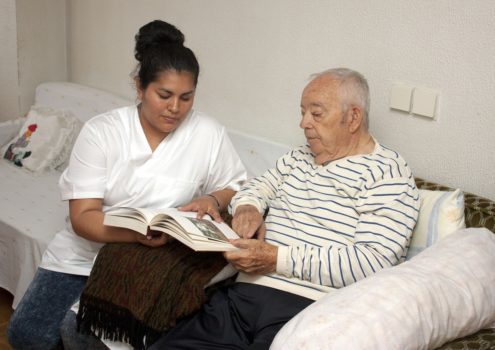
How pain in people with dementia is recognized and treated also depends on where and by whom they are cared for. Can targeted measures for caregivers and doctors improve the management of the affected individuals' complaints? This question is at the heart of a review by Australian researchers.
Recognizing and treating pain in people with dementia is a major challenge for staff in nursing homes and hospitals, emphasize Yvette I-Pei Tasi from the University of Newcastle and her colleagues. On the one hand, those affected can no longer draw attention to pain due to their declining abilities. On the other hand, a person's cognitive impairments and certain behavioral symptoms of dementia, such as wandering, depression, or aggression, can overlap with the experience of pain.
Environment and cognitive impairment affect pain management
Previous studies suggest that healthcare professionals handle pain differently depending on whether the patient has a cognitive impairment or is mentally healthy. The type of care setting also plays a role. According to these studies, individuals with dementia who were treated in hospitals received fewer opioid painkillers than their age-matched counterparts without dementia. Furthermore, they waited longer in emergency rooms to receive pain medication.
Among the treatments developed to manage pain in people with dementia are pain relievers, electrical nerve stimulation, massage, music and movement therapies, therapeutic robots, and new pain detection technologies.
Targeted strategies for specialists examined
How can these procedures best be applied? Targeted measures for healthcare professionals come into play here. According to the authors, they are crucial for improving pain management in dementia care. The aim of their current review was therefore to provide practical insights into measures for healthcare professionals to deal with the complex problem of pain in dementia care.
Six studies were evaluated
For this, the researchers looked for studies that met the following four criteria:
The participants were people aged 65 and older who had been diagnosed with dementia.
The study examined measures developed for healthcare professionals to improve pain management in dementia.
3) There was a control group that received standard care.
4) As a result, the effects of the measure on healthcare personnel and people with dementia were measured.
Six studies published between 2014 and 2018 met these criteria. Five were conducted in nursing homes, and one was conducted in a hospital. The individual studies involved between 112 and 602 participants. The interventions examined were mostly training sessions or workshops for nurses or other healthcare professionals. The duration ranged from a 6-hour training to a 4-month training program.
Comprehensive pain models instead of individual assessment aids
Researchers found that individual pain assessment aids, which were routinely used, had no effect on how healthcare staff managed pain medication for people with dementia. The opposite was true for comprehensive pain management models, which are composed of various measures and involve professionals from different disciplines. Such models appeared to improve pain assessment and treatment in dementia care.
Physician involvement plays a role.
However, there were differences depending on whether pain was treated with medication or non-pharmacologically. One factor in this is physician involvement: the study, which focused on physician prescription of pain medication, found a significant improvement in patients' pain scores. Measures involving only nurses and other healthcare professionals showed no impact on pain medication management but had a positive effect on non-pharmacological pain management.
Collaboration between different professional groups is necessary
Overall, the authors call for a balanced use of pain relievers and non-pharmacological measures. Despite their benefits, drug-based pain treatment can cause undesired side effects. Therefore, non-pharmacological therapy appears to be a safer option.
The authors see their findings as evidence of the need to involve interdisciplinary healthcare professionals to improve pain management in dementia care.
Here you can find the study:
The effectiveness of interventions to improve pain assessment and management in people living with dementia: A systematic review and meta-analysis (November 2020)