



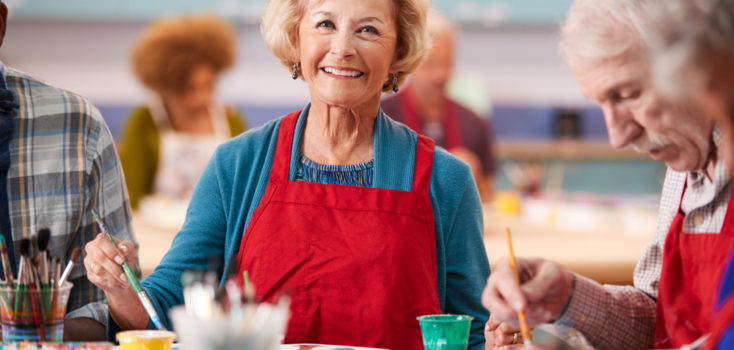
Preventing Cognitive Decline: The Social Network is Crucial

Alongside hearing loss, high blood pressure, and diabetes, social isolation in older adults is one of the modifiable risk factors that can contribute to the development of dementia. An interdisciplinary research team from Friedrich-Alexander-Universität Erlangen-Nürnberg (FAU) has now investigated the connection between social isolation and cognitive impairment. The results show: people with cognitive impairments have a high...

Volunteering strengthens one's own cognitive abilities

Volunteering in your free time feels good: it strengthens cohesion in a club, helps the environment, and supports older people, for example. What had hardly been scientifically investigated until now is the health benefit for the volunteers themselves. A research team from FAU Erlangen-Nürnberg and the Bavarian Digital Dementia Register (digiDEM Bayern) has...

Volunteering strengthens one's own cognitive abilities

Volunteering in your free time feels good: it strengthens cohesion in a club, helps the environment, and supports older people, for example. What had hardly been scientifically investigated until now is the health benefit for the volunteers themselves. A research team from FAU Erlangen-Nürnberg and the Bavarian Digital Dementia Register (digiDEM Bayern) has...

Effective Training in Technology

Digital technologies support people in many ways to manage their lives. However, people with dementia can also benefit from tablets and apps. As their cognitive abilities decline, they need support in learning how to use touchscreens and the like. Apps for cognitive training, appointment scheduling, games, leisure activities, or art: In the...

Social integration can reduce the risk of dementia

If risk factors are identified and influenced, they can delay or ideally prevent the onset of dementia. Social integration is a significant and modifiable risk factor in this regard. However, there is currently a lack of comprehensive understanding of the connection between dementia risk and social integration.

Soziales Engagement wirkt sich positiv auf Gesunderhaltung aus.

The objective of the systematic review by Wang and colleagues was therefore to present the connection between social integration and dementia risk, as well as the influence of social participation over a longer period. In the study, the researchers defined „social integration“ as the individual's connection to society, family, friends, and community facilities. The authors based this definition on a specific model. Overall, the researchers analyzed 32 studies, with the observation period varying between two and 20 years. 

Social engagement has a positive impact on health maintenance

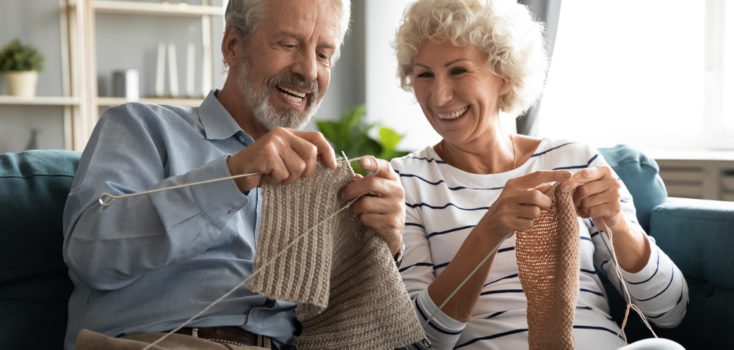
The researchers concluded that social engagement and the frequency of social contact, in particular, represent a protective factor. Furthermore, the size of one's social network can have a significant influence on maintaining health. According to Wang and colleagues, active participation in social activities plays a more important role than simply accepting social support.

Loneliness is associated with a higher risk of dementia

However, the study also highlights the negative effects of a lack of social engagement on the risk of dementia. For example, loneliness can be compared to obesity in terms of its impact as a risk factor for dementia and is even considered more significant than hearing loss as a risk factor for dementia. 

In summary, the researchers are certain that the factors identified as contributing to social integration can provide policymakers, health experts, and researchers with valuable insights for developing measures to prevent dementia in adults.

Hier geht’s zur Studie:
Association between social integration and the risk of dementia: A systematic review and meta-analysis of longitudinal studies

Structured approach reduces depression and stress

Depressive symptoms and stress in caregivers, as well as behavioral symptoms in people with dementia, can be reduced. One approach for this is the so-called DICE strategy. Anxiety, depression, apathy, or wandering – dementia-related neuropsychiatric symptoms (NPS) are a major challenge for people with dementia, their family members, and caregivers. NPS lead to a higher...

Dementia prevention reduces risks

Up to 40 percent of dementia cases are linked to risk factors that can be changed. These include, for example, lifestyle, stress, diet, and vascular diseases. The preventive potential is therefore significant. Closing existing knowledge gaps about risk factors also has a preventive effect. A Finnish long-term study has revealed a number of positive...

Preventing falls – but how?

Falls von Menschen mit Demenz lassen sich vermeiden. It is important to know which additional diagnosed illnesses are present, what the medication regimens are, or in what environment the person lives. The numbers are alarming. Over a period of two and a half years, 31.1 percent of older adults with dementia suffered...

Raise public awareness

What do people think about dementia, and how do they think about it? Two studies conclude that extensive public awareness campaigns are necessary to understand the disease and counteract stigmatization. Two studies have examined the extent to which the public is informed about dementia, whether they know exactly what the disease means, and...