
E-Learning as Support for Family Caregivers

Die Unterstützung und Betreuung von Menschen mit Demenz stellt für pflegende Angehörige sowie professionelle Pflegekräfte häufig eine große Herausforderung dar. Eine Untersuchung hat nun gezeigt, dass E-Learning-Programme ihnen helfen können. Sie führten dazu, dass sich die Pflegenden sicherer in ihrer Rolle fühlten und weniger Stress empfanden. Zudem erhöhten sie die …

„Use it or lose it“: crosswords against cognitive decline?

Dass intellektuelle Beschäftigung den Erhalt der kognitiven Fähigkeiten im Alter fördert, gilt als allgemein akzeptiert, bekannt auch als „Use it or lose it“-Theorie. Eine Studie aus der Weihnachtsausgabe des British Medical Journal 2018 zeigt: Da ist auf jeden Fall etwas dran – aber ganz so einfach ist es nicht.  Die …

Conversation Strategies for Robots Interacting with People with Dementia

Gespräche zwischen Menschen mit Demenz und Robotern – bei vielen löst dieses Bild ein mulmiges Gefühl aus. Eine Studie kommt allerdings zu positiven Ergebnissen: Insbesondere durch den Einsatz von Gesprächsstrategien hätten die Probanden die Unterhaltungen mit Robotern genossen und seien sogar zu längeren Gesprächen animiert worden. Grundsätzlich haben Roboter nach …

Study: Professional footballers die more frequently from dementia

Scottish professional footballers have a lower mortality rate than the general population, according to a recent retrospective study. However, they are more likely to die from neurodegenerative diseases such as dementia. The link between contact and collision sports and neurodegenerative diseases has already been investigated in the past: studies have shown that sports like American football, ice hockey, or boxing are associated with...

Driving with dementia?

Fahrtauglichkeit und Demenz – ein sensibles Thema. Einerseits sind Demenzerkrankungen häufig schon früh mit kognitiven und nicht-kognitiven Einschränkungen verbunden, was die Sicherheit im Straßenverkehr gefährdet. Andererseits stellt das Autofahren für viele Menschen eine besondere Form der Autonomie dar, so dass jeder Einzelfall abgewogen werden sollte. Eine aktuelle Übersicht zeigt, wie …

Dementia Care in the Region: digiDEM Bavaria Lecture in Cham

December 2, 2019, 10:00 AM - 12:00 PM. As a care project for people with dementia and their relatives, one aspect is particularly important for the Bavarian Digital Dementia Registry: to be represented throughout Bavaria, especially in rural regions. This is the only way to identify gaps in care and improve the situation for those affected. On December 2nd...

„After the diagnosis... what now?“

Shock, grief, fear – a dementia diagnosis represents an existential turning point for those affected and their loved ones. Professional support and targeted information are therefore all the more important – but they often take too long to arrive. Henry Brodaty, Professor of Aging and Mental Health, also reported this at the Alzheimer Europe conference in The Hague.

How can e-Health measures help people with dementia and their relatives?
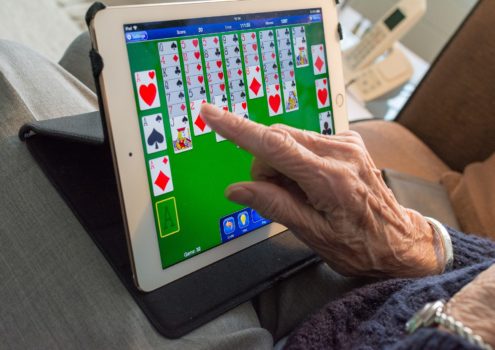
New technologies and e-health measures were among the focal points of this year's Alzheimer Europe conference, held from October 23rd-25th in The Hague. The focus was on the potential of e-health services and so-called „wearables.“ Marjolein de Vugt, Professor of Psychosocial Innovations in Dementia at Maastricht University Medical Center, emphasized in her presentation...