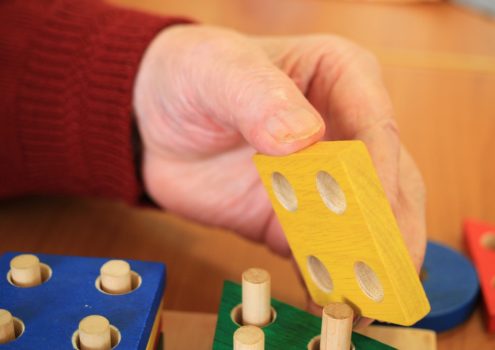

Brain training: Smartphone for men, newspaper for women? 

Zeitung lesen, Kreuzworträtsel lösen oder eine neue Sprache lernen – geistig anregende Freizeit-Aktivitäten können Studien zufolge das Risiko senken, im Alter eine Demenz zu entwickeln. Nur: Was genau hilft am besten, welches Hobby sollte man sich vielleicht zulegen? Mit dieser Frage befasst sich eine aktuelle Studie aus Großbritannien.  Hintergrund der …

Apps for Family Caregivers

Smartphones und Tablets sind aus dem Alltag kaum noch wegzudenken. Die Zahl der mobilen Apps steigt rasant, auch im Gesundheitsbereich. Spanische Forscher*innen haben Apps untersucht, die speziell für pflegende Angehörige entwickelt wurden. Sie wollten überprüfen, ob die Anwendungen wirklich auf die Bedürfnisse dieser Zielgruppe zugeschnitten sind.  Diese Bedürfnisse, so Marina …

Dementia and incontinence – a taboo

Many people with dementia and their loved ones are affected by this, but it's rarely spoken about due to shame: going to the toilet becomes a problem over the course of the illness, and those affected often become incontinent. A British study names possible causes, describes the effects on everyday life, and proposes solutions. The authors...

Online-Kurs, Pflege-App und Demenz-Podcast: die Gewinner des Open Innovation Wettbewerbs

Unterstützung, Teilhabe, Austausch – unter diesem Motto stand der Open Innovation Wettbewerb von digiDEM Bayern. Die drei Gewinner des Wettbewerbs finden Sie jetzt auf der digiDEM Webseite. Ausgezeichnet wurden ein Online-Pflegekurs für Angehörige von Menschen mit Demenz, ein Podcast mit ausführlichen Informationen rund um die Erkrankung und eine App, die …

„Dementia? Help for Relatives – Prof. Gräßel in an ARD alpha Interview

How do those affected and their relatives live after a dementia diagnosis? How does the disease progress and what help is available? The program „Dementia? Help for Relatives,“ broadcast on ARD alpha on April 7, 2021, addressed these and other questions. Prof. Dr. med. Elmar Gräßel, head of the Center for...

Non-pharmacological therapy in dementia: the MAKS® therapy

Dementia diagnosis – what now? Currently, there is no reliable way to prevent or cure degenerative dementias. In the area of drug treatment, there have been no significant developments in recent years. Therefore, non-pharmacological therapies, such as the MAKS® therapy, are particularly important for treating cognitive impairments up to dementia...

Alzheimer's Prevention: The Current State of Research

How can Alzheimer's disease be prevented? There are numerous studies on this topic. An international team of researchers has summarized a large portion of current research. Their analysis contains 21 recommendations, tiered according to their scientific significance. According to the researchers, led by Jin-Tai Yu from Shanghai University, this is the most extensive review to date on prevention…