
Detecting dementia risk with smartphone data

Menschen mit kognitiven Beeinträchtigungen fällt es häufig schwer, sich räumlich zu orientieren und problemlos von A nach B zu gelangen. Dabei sind diese oft mit einer Demenz verbundenen kognitiven Veränderungen entscheidend, um die Erkrankung frühzeitig zu erkennen und behandeln zu können. Wie sich mit Hilfe von speziellen Smartphone-Daten erste Anzeichen für ein erhöhtes …

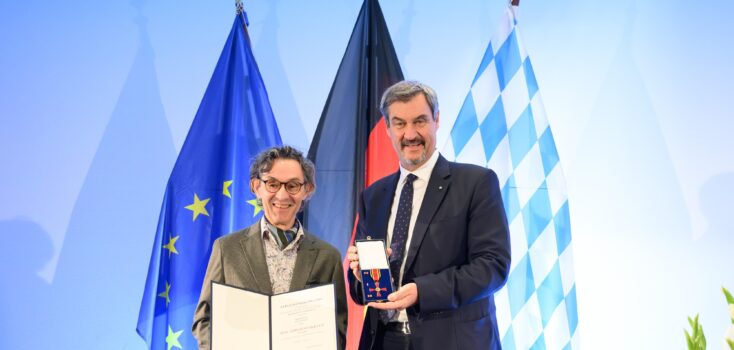
Bavaria's Minister of Health Judith Gerlach at the Dementia Screening Day in Hösbach

Bavarian State Minister for Health, Care, and Prevention, Judith Gerlach, opened the first digiDEM Bayern (Bavaria Dementia) screening day in Hösbach, Lower Franconia. The public's interest in having their memory performance checked was enormous: the test day was fully booked. In her welcoming remarks at the Hösbach Library Center, where the test day took place, the Health Minister emphasized...

digiDEM Bavaria Study: Dementia Knowledge – The Most Important Source of Information is Personal Contact

Globally, 75 percent of all people with dementia live with the condition without it ever being diagnosed. This means dementia is frequently underdiagnosed – primarily due to a lack of knowledge about the disease and its symptoms. This raises the question of where exactly people with mild cognitive impairments and people...

Air pollution as a risk factor for dementia

Umweltfaktoren rücken immer mehr in den Mittelpunkt der Forschung über die Entstehung von Krankheiten wie z. B. der Alzheimer-Krankheit. Verschiedene Studien zeigen, dass Luftverschmutzung die kognitiven Fähigkeiten negativ beeinflussen kann und sogar als Risikofaktor für Demenzerkrankungen gilt. Doch wie wirken Feinstaub, Stickstoffdioxid und andere Luftschadstoffe auf das Gehirn? Und welche …

Offset polluted air through exercise 

Air pollution is a serious risk factor for dementia, especially in combination with an unhealthy lifestyle. However, regular exercise can mitigate the risk and is an effective preventive measure, even in polluted environments. A study from China investigated how air pollution, specifically exposure to nitrogen dioxide (NO₂) and fine particulate matter (particle sizes PM2.5 and ...

Preventively reduce air pollutants 

How will air pollution and climate change affect the frequency of new dementia cases in the future? Researchers from Spain investigated this question. Air pollution is a major health risk that is exacerbated by climate change. For example, various studies have shown links between pollutants such as fine particulate matter and nitrogen dioxide and Alzheimer's...

Fine dust causing dementia

Science has extensively investigated how air pollutants affect cognitive functions, changes in brain structure, and the occurrence of dementia. However, the body of research is not always clear, and the findings are often contradictory. Four publications offer clear statements. For example, researchers from Canada examined the connection between air pollution and…

Dementia Risk Factors: Fine Particulate Matter & More.

Environmental factors play a significant role in dementia diseases. Researchers from Canada and the USA have identified nine environmental factors in a current review study that increase the risk for Alzheimer's disease, vascular dementia, and other forms of dementia, as well as mild cognitive impairment (MCI). According to the World Health Organization (WHO), environmental risk factors can be defined as external physical, chemical, biological, and...