
Tested for dementia – now what?

Dementia prevention at the municipal level – how can it succeed? A study from the USA investigated how older people deal with their test results and the information they received after the test. More than half of the study participants shared their screening results with their families, and a good third informed...

Relief after the memory test

Dementia screening by primary care physicians: What are the risks and benefits? Researchers in the USA have investigated in a study whether targeted dementia testing for older people has advantages or disadvantages. It was previously unclear whether primary care screening for dementia offers more benefits to older people...

Pay attention to quality with health apps

Smartphone applications are increasingly supplementing traditional healthcare: they can support patients in the prevention, treatment, or healing of diseases and also help people with dementia. For many manufacturers of so-called digital health applications (DiGA), the year 2019 represented a turning point: Germany was the first country in the world to...

Webinar: Menopause and Cognitive Health

Hot flashes, sleep disturbances, mood swings – the menopausal phase can cause various physical and mental changes in women. Memory performance and other cognitive abilities, such as concentration and attention, can also be influenced by hormonal changes during this life stage. To alleviate the various symptoms of menopause, menopausal hormone replacement therapy can be used in...

digiDEM Bavaria sets milestone for early dementia detection 

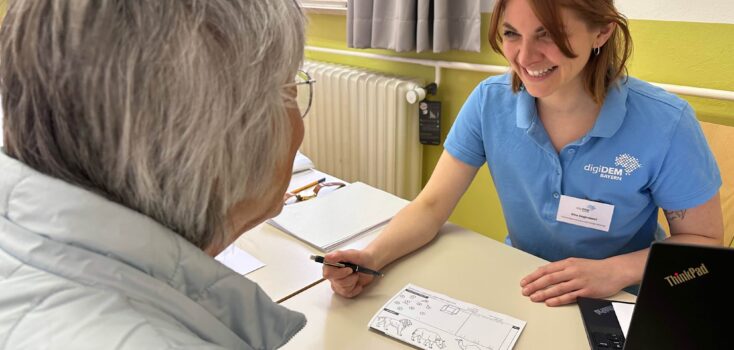
On the occasion of the 6th Bavarian Dementia Week from September 19 to 28, 2025, the research project digiDEM Bavaria is setting a unique milestone for the early detection of dementia: citizens can have their cognitive performance tested at 56 locations in all Bavarian administrative districts – close to home and free of charge. With this, the most extensive wave of dementia screening days to date...

Guidelines for MCI Therapy

To provide care for people with Mild Cognitive Impairment (MCI), scientifically validated recommendations for MCI diagnosis and treatment are needed. Researchers from China have compiled and compared a systematic overview of 13 guidelines – including four practice guides and nine so-called consensus statements from expert professionals. The researchers...

Brain training and a healthy lifestyle

Nicht immer sind Medikamente die Lösung, wenn es darum geht, die geistige Leistungsfähigkeit bei Menschen mit leichten kognitiven Beeinträchtigungen (MCI) zu verbessern und vielleicht sogar einer Demenz vorzubeugen. Forschende aus Hong Kong haben in einer aktuellen Übersichtsarbeit aus dem Jahr 2025 zusammengestellt, welche miteinander kombinierten, nicht-medikamentösen Therapien förderlich sein können. …

Training at MCI – digital and custom-made

Personalisiertes, computergestütztes Gehirntraining kann eine wirksame Methode zur Verbesserung der geistigen Fähigkeiten bei Menschen mit leichter kognitiver Beeinträchtigung sein. Dies zeigte eine Studie unserer Kolleginnen und Kollegen des Universitätsklinikums Erlangen auf dem vergleichsweise jungen Forschungsfeld der MCI-Forschung. Die Studie wurde 2024 im renommierten Fachmagazin BMC Medicine veröffentlicht. Nicht-pharmakologische Behandlungen rücken …